

Charlotte, NC, July 23, 2025
News Summary
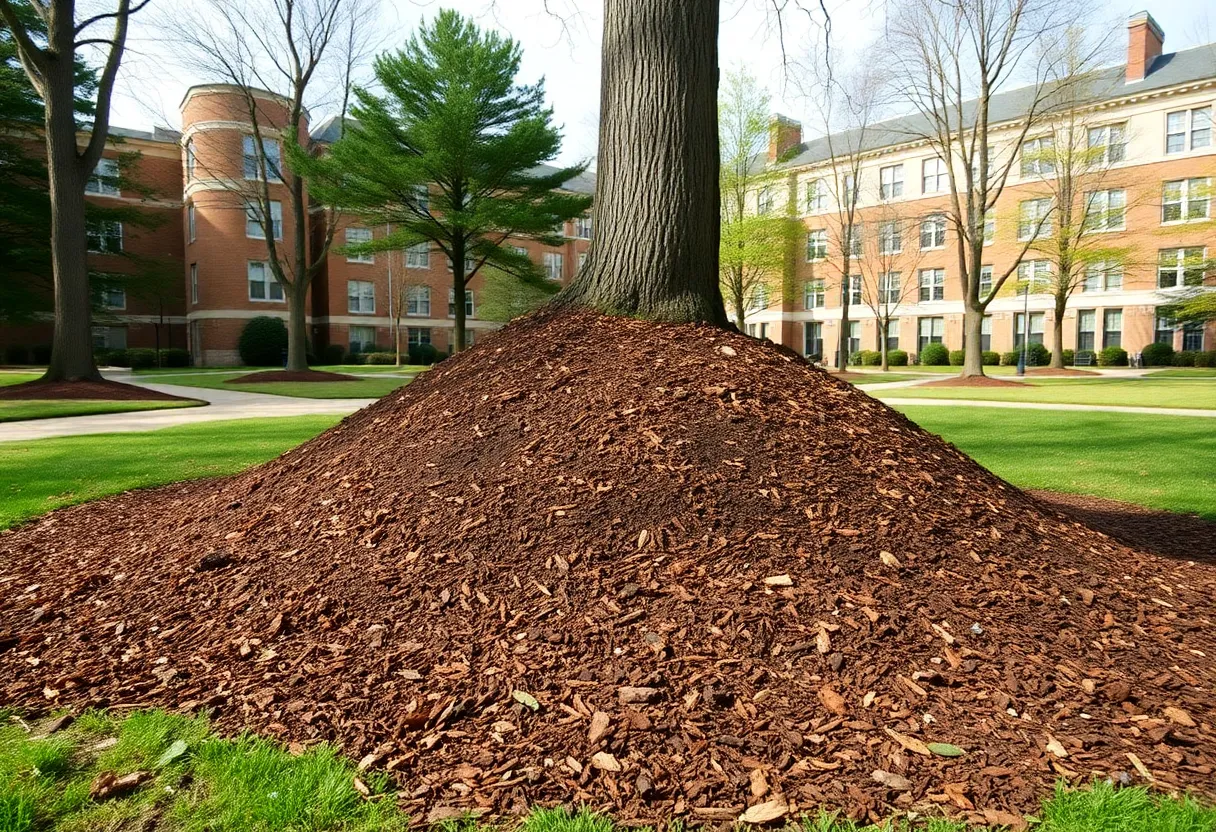
A recent social media post has raised alarms about mulch volcanoes at the University of North Carolina at Charlotte. Observations revealed that every tree on campus has significant mulch piles around its base, a landscaping technique that experts warn could harm tree health. Concerns include excessive moisture retention leading to rot and the suffocation of roots. The university’s landscaping practices are under scrutiny as they may not align with proper horticultural standards, thus compromising the long-term health of the urban trees on campus.
Charlotte, NC – A recent social media post has sparked concern regarding the landscaping practices at the University of North Carolina at Charlotte (UNC Charlotte), particularly the use of a technique known as mulch volcanoes. A pedestrian shared their observations on the r/arborists subreddit, illustrating that every tree on campus appears to be surrounded by piles of mulch, a practice that many experts deem harmful.
The posted images reveal that the university campus features more than a hundred trees, all treated with this controversial landscaping method. The concept behind mulch volcanoes is to protect tree roots and conserve moisture; however, professionals warn that this technique can do more harm than good.
According to the University of New Hampshire, mulch volcanoes can lead to several problems for trees. They trap excess moisture around the trunk, creating an environment conducive to rot and mold. For young trees, these mulch piles can hide the essential root flare, a crucial aspect for healthy growth, especially during variable weather conditions. Instead of roots spreading outward, mulch volcanoes can cause roots to wrap around the trunk, restricting the tree’s ability to absorb water and nutrients.
The proper way to mulch trees involves applying an even layer of about three inches of mulch while maintaining a gap between the mulch and the tree trunk. This method allows for better air circulation and prevents moisture trapping, promoting healthier tree development.
Commenters on the original post echoed similar concerns, with one user pointing out that trees may appear to thrive for about ten years before subsequently failing during storms. This sentiment reflects a broader worry that improper landscaping techniques could compromise the long-term health of urban trees.
A former employee of UNC Charlotte’s grounds department shed some light on the issue, mentioning that although the university does employ an arborist, the landscaping team is understaffed and often relies on third-party contractors for maintenance. This reliance raises questions about the consistency and quality of the university’s landscaping practices, particularly regarding the care provided to the numerous trees on campus.
While mulch volcanoes may have been implemented with the intention of supporting the university’s trees, the backlash from the community and experts emphasizes the need for reevaluation of such landscaping techniques. The prevalence of this method on campus signifies a gap in understanding proper arboriculture practices as well as the potential consequences of cutting corners in landscape management.
Understanding Mulch Volcanoes
Mulch volcanoes form from large piles of mulch built up around the bases of trees. While they are thought to aid in moisture retention, they inadvertently encourage a host of issues that can jeopardize tree health over time. Here’s a summary of the primary features of this landscaping method:
| Feature | Impact |
|---|---|
| Excess moisture retention | Promotes rot and mold growth |
| Covering root flare | Prevents healthy root structure |
| Root wrapping | Restricts nutrient and water absorption |
| Improper mulch depth | Weakens tree stability during storms |
Future Considerations
The feedback from the community and the information gathered from experts prompt a deeper examination of landscaping practices at the University of Charlotte. The concern for tree health and sustainability is mounting; therefore, the institution may consider revising their current techniques to align with proper horticultural standards. Engaging qualified professionals and ensuring that staff is adequately trained could contribute to maintaining a healthier urban canopy across the UNC Charlotte campus.
FAQ
What are mulch volcanoes?
Mulch volcanoes are large piles of mulch placed around the base of trees, which are intended to retain moisture and protect tree roots.
Why are mulch volcanoes harmful?
They can trap excess moisture, leading to rot and mold, suffocate roots, and prevent proper nutrient absorption, ultimately harming the tree’s health.
What is the proper way to mulch a tree?
The correct method involves applying about three inches of mulch in an even layer while keeping a gap between the mulch and the trunk.
Deeper Dive: News & Info About This Topic
HERE Resources
Additional Resources
- The Cool Down: University of Charlotte Landscaping Practices
- Wikipedia: Mulch
- The Cool Down: Tips to Avoid Mulch Volcanoes
- Google Search: Tree Health and Mulch
- The Cool Down: Why Mulch Volcanoes Are Bad for Trees

Author: HERE Charlotte
The CHARLOTTE STAFF WRITER represents the experienced team at HERECharlotte.com, your go-to source for actionable local news and information in Charlotte, Mecklenburg County, and beyond. Specializing in "news you can use," we cover essential topics like product reviews for personal and business needs, local business directories, politics, real estate trends, neighborhood insights, and state news affecting the area—with deep expertise drawn from years of dedicated reporting and strong community input, including local press releases and business updates. We deliver top reporting on high-value events such as Lovin' Life Music Festival, Charlotte Pride festival, and major sporting tournaments at Bank of America Stadium. Our coverage extends to key organizations like the Charlotte Regional Business Alliance and Foundation for the Carolinas, plus leading businesses in finance and entertainment that power the local economy such as Bank of America and NASCAR. As part of the broader HERE network, including HEREAsheville.com, HEREGreensboro.com, HERERaleigh.com, and HEREOBX.com, we provide comprehensive, credible insights into North Carolina's dynamic landscape.