
Charlotte, North Carolina, January 14, 2026
In a notable event, over 30 priests from the Diocese of Charlotte have formally submitted questions to the Vatican regarding Bishop Michael Martin’s recent liturgical changes. These changes, effective January 16, ban altar rails, kneelers, and prie-dieus for Holy Communion. The priests’ inquiries question the authority of the bishop in implementing such prohibitions, reflecting concerns over the future of traditional practices within the diocese. This appeal highlights ongoing tensions in the Catholic Church regarding local authority and universal norms.
Charlotte
Priests Challenge Bishop’s Liturgical Directives at Vatican
In a significant development within the Catholic Church, more than 30 priests from the Diocese of Charlotte, North Carolina, have formally questioned the Vatican regarding recent liturgical changes implemented by their bishop. The priests submitted a series of questions, known as “dubia,” to the Vatican’s Dicastery for Legislative Texts on January 5, 2026. This action comes in response to Bishop Michael Martin’s pastoral letter, issued on December 17, 2025, which announced the prohibition of altar rails, kneelers, and prie-dieus for receiving Holy Communion within the diocese, effective January 16, 2026. The move by the Charlotte priests highlights growing concerns over diocesan authority in liturgical matters and the future of traditional practices.
Details of the Liturgical Dispute
Bishop Michael Martin’s pastoral letter outlined new norms for the reception of Holy Communion in the Diocese of Charlotte. These directives specifically ban the use of altar rails, kneelers, and movable kneeling aids (prie-dieus) during public celebrations of the Eucharist. While existing permanent altar rails will not be removed physically, their use for receiving communion will be discontinued. Any temporary or movable kneeling fixtures are required to be removed by January 16, 2026. The bishop stated that the new norms aim to strengthen unity in worship, uphold the Church’s liturgical standards, and promote active participation by the faithful. He cited guidance from the U.S. Conference of Catholic Bishops (USCCB) which indicates that the normative posture for Holy Communion across the United States is standing. Although individuals retain the right to kneel, Bishop Martin encouraged the faithful to consider the communal witness achieved through a common posture.
The group of 31 priests, representing approximately one-quarter of the clergy in the Charlotte Diocese and including two-thirds of its pastors, has raised questions regarding the bishop’s authority to impose such prohibitions. Their “dubia” specifically inquire whether a diocesan bishop can forbid the installation or use of altar rails, or prohibit the use of kneelers for those who, of their own accord, wish to receive Holy Communion while kneeling. The priests’ letter to the Vatican expresses deep concern that these decisions may impede the faithful’s ability to express their devotion through kneeling, a practice explicitly permitted by the General Instruction of the Roman Missal.
Broader Concerns Over Traditional Practices
Beyond the immediate issue of altar rails and kneelers, the priests’ appeal to the Vatican also touches on broader concerns about potential future restrictions on other traditional liturgical elements. These concerns stem partly from a leaked draft policy from May 2025, which reportedly outlined intentions to prohibit Roman-style vestments, certain altar ornaments, the use of Latin, and specific prayers traditionally recited by priests. The diocesan priests’ letter to the Vatican highlights that both the leaked draft and the December pastoral letter have caused considerable apprehension among clergy and lay faithful who value these traditional practices.
Liturgical Authority and Practice
The controversy in Charlotte underscores the complex relationship between local diocesan authority and universal Church norms regarding liturgical practices. In the Catholic Church, bishops hold significant authority over the liturgy within their dioceses. However, this authority is also guided by universal Church law and documents from the Holy See. The Vatican’s Dicastery for Legislative Texts is responsible for interpreting canon law and providing authoritative responses to questions concerning the Church’s legal framework.
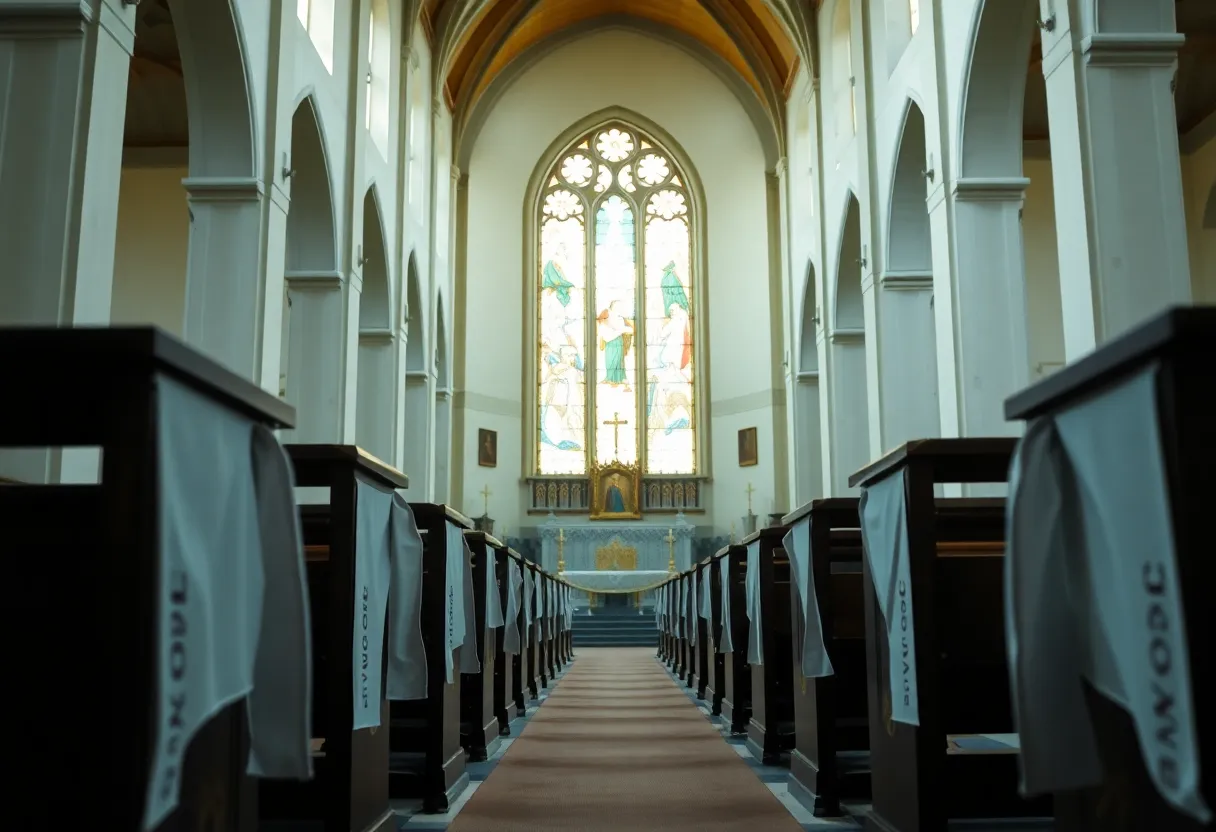
Historically, altar rails served to separate the sanctuary from the nave, emphasizing the sacredness of the altar and often providing a place for the faithful to kneel when receiving Holy Communion. While their removal became more common after the Second Vatican Council, kneeling for Communion remains an option explicitly permitted by liturgical law. The Vatican document Redemptionis Sacramentum also affirms the right of the faithful to receive Holy Communion kneeling. The current debate in Charlotte reflects ongoing discussions within the Church regarding the balance between promoting unity in liturgical practice and respecting diverse expressions of piety and tradition.
Implications and Outlook
The submission of “dubia” to the Vatican marks a formal appeal for clarification and potentially intervention from a higher authority within the Church hierarchy. The Vatican’s response will be closely watched, not only in the Diocese of Charlotte but also by Catholics across the United States and beyond, as it could set precedents for similar liturgical disputes. The decision to implement these changes, particularly the removal of movable kneeling aids, is set to take effect on January 16, 2026, adding urgency to the situation. This event demonstrates how internal Church disputes over worship practices can gain significant public and online attention, highlighting divisions within dioceses over liturgical authority and leadership styles.
Frequently Asked Questions (FAQ)
- What is the main issue concerning the Charlotte priests?
- The main issue is Bishop Michael Martin’s directive to prohibit the use of altar rails, kneelers, and prie-dieus for receiving Holy Communion in the Diocese of Charlotte, effective January 16, 2026.
- Who is involved in this dispute?
- Thirty-one priests from the Diocese of Charlotte have submitted questions to the Vatican’s Dicastery for Legislative Texts, challenging Bishop Michael Martin’s liturgical directives.
- What are altar rails and kneelers?
- Altar rails are structures that traditionally separate the sanctuary from the main body of the church, often used by the faithful to kneel when receiving Holy Communion. Kneelers are individual or communal aids used for kneeling during prayer or the reception of the Eucharist.
- Why are these changes significant to some priests and faithful?
- Many priests and faithful view the use of altar rails and kneelers as important traditional practices and expressions of piety, with kneeling for Communion explicitly permitted by liturgical law.
- What is the role of the Vatican in this matter?
- The Vatican’s Dicastery for Legislative Texts is the recipient of the priests’ “dubia” and is responsible for interpreting canon law, potentially offering guidance or clarification on the bishop’s authority in this situation.
- What is the current status of the situation?
- The priests submitted their questions on January 5, 2026, and the bishop’s directive to remove temporary kneeling aids is set to take effect on January 16, 2026. The Vatican’s response to the “dubia” is pending.
Key Features of the Charlotte Liturgical Controversy
| Feature | Description | Geographic Scope |
|---|---|---|
| Main Event | Submission of “dubia” (formal questions) by priests to the Vatican. | State-level (North Carolina) |
| Parties Involved | 31 priests from the Diocese of Charlotte, Bishop Michael Martin, Vatican’s Dicastery for Legislative Texts. | State-level (North Carolina) / Nationwide (Vatican interaction) |
| Issue at Hand | Prohibition of altar rails, kneelers, and prie-dieus for Holy Communion. | State-level (North Carolina) |
| Effective Date of Ban | January 16, 2026. | State-level (North Carolina) |
| Bishop’s Rationale | Strengthen unity in worship, align with USCCB norms (standing is normative posture). | State-level (North Carolina) / Nationwide (USCCB guidance) |
| Priests’ Concerns | Questioning bishop’s authority, impact on faithful’s right to kneel, potential broader liturgical restrictions. | State-level (North Carolina) |
Deeper Dive: News & Info About This Topic
HERE Resources

Author: HERE Charlotte
The CHARLOTTE STAFF WRITER represents the experienced team at HERECharlotte.com, your go-to source for actionable local news and information in Charlotte, Mecklenburg County, and beyond. Specializing in "news you can use," we cover essential topics like product reviews for personal and business needs, local business directories, politics, real estate trends, neighborhood insights, and state news affecting the area—with deep expertise drawn from years of dedicated reporting and strong community input, including local press releases and business updates. We deliver top reporting on high-value events such as Lovin' Life Music Festival, Charlotte Pride festival, and major sporting tournaments at Bank of America Stadium. Our coverage extends to key organizations like the Charlotte Regional Business Alliance and Foundation for the Carolinas, plus leading businesses in finance and entertainment that power the local economy such as Bank of America and NASCAR. As part of the broader HERE network, including HEREAsheville.com, HEREGreensboro.com, HERERaleigh.com, and HEREOBX.com, we provide comprehensive, credible insights into North Carolina's dynamic landscape.