
Charlotte, North Carolina, December 25, 2025
Charlotte, North Carolina, experienced its warmest Christmas Eve in history this year, marking a significant departure from the usual cold December temperatures. Residents enjoyed a mild holiday, but a notable cool-down is expected soon. This warmth is unusual given Charlotte’s historical rarity of white Christmases, emphasizing the unique nature of this year’s festive season. In addition to weather news, the article reflects on longstanding traditions of Christmas, including the ’12 Days of Christmas’ and the popular ugly Christmas sweater phenomenon.
Charlotte, North Carolina
Record-Setting Warmth Graces Charlotte’s Christmas Eve
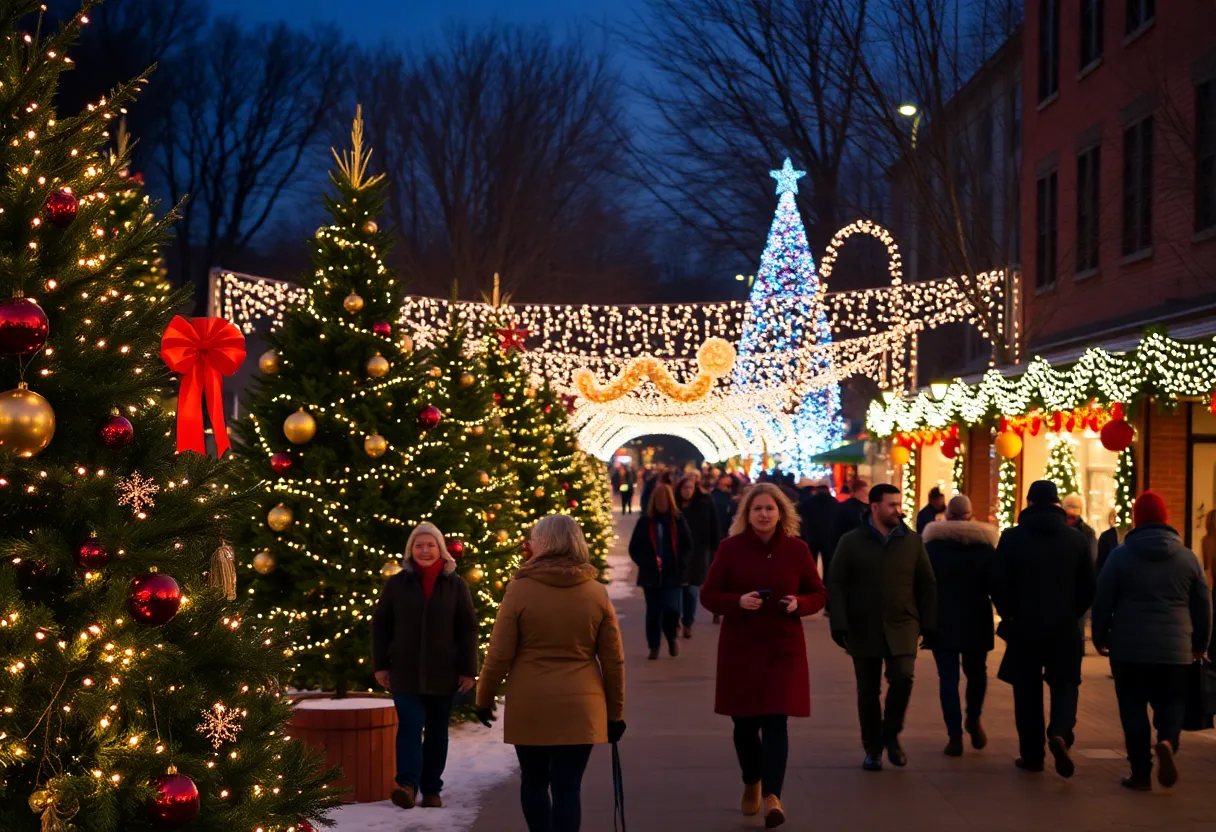
Charlotte experienced its warmest Christmas Eve in history this year, a notable event as the region celebrated the holiday season. The unusual warmth marks a departure from typical December temperatures. However, a significant cool-down is anticipated after the weekend, suggesting that residents will soon feel more traditional winter weather.
The city’s history with winter holidays shows that a white Christmas is a rare occurrence. For instance, 2010 marked the first white Christmas in Charlotte in 63 years, and it was only the third such event on record. This historical context highlights the exceptional nature of the recent mild temperatures.
Understanding the Tradition of the “12 Days of Christmas”
As the festive period continues, many are reflecting on the traditions that define Christmas. Among these is the concept of the “12 Days of Christmas,” a Christian season known as Twelvetide, which celebrates the birth of Jesus. This period officially begins on December 25th, Christmas Day, and concludes on January 6th, known as the Epiphany or Three Kings’ Day, marking the arrival of the Three Wise Men.
Historically, the duration of this festive season was formally established in 567 AD by the Council of Tours. This proclamation declared the twelve days from Christmas to Epiphany as a sacred and festive time, also setting the duty of Advent fasting in preparation. The purpose behind this was to help the Roman Empire reconcile its solar Julian calendar with the lunar calendars used in its eastern provinces. For Christians, these twelve days are a period of rededication and renewal, often involving daily church services in earlier times.
There is a widely known, though largely debated, theory suggesting that the carol “The Twelve Days of Christmas” served as a secret code during periods in English history when Catholicism was outlawed. According to this theory, each gift mentioned in the song represented a specific aspect of Christian faith, allowing adherents to covertly teach catechism to children. For example, the “partridge in a pear tree” was believed to symbolize Jesus Christ, while the “two turtle doves” represented the Old and New Testaments. Other symbolic interpretations include the “three French hens” standing for Faith, Hope, and Charity, the “four calling birds” for the Four Gospels, and the “five golden rings” for the Pentateuch, the first five books of the Old Testament. The subsequent gifts also held symbolic meanings: six geese a-laying for the six days of creation, seven swans a-swimming for the seven gifts of the Holy Spirit, eight maids a-milking for the eight beatitudes, nine ladies dancing for the nine Fruits of the Holy Spirit, ten lords a-leaping for the Ten Commandments, eleven pipers piping for the eleven faithful Apostles, and twelve drummers drumming for the twelve points of doctrine in the Apostles’ Creed. However, many scholars and fact-checking organizations have largely debunked this “secret code” hypothesis, stating that the theological tenets supposedly hidden were common across various Christian denominations at the time, and therefore, there would have been no need for secrecy. The carol most likely originated in France and became a popular memory game.
The Evolution of the Ugly Christmas Sweater
Another modern holiday phenomenon that has gained considerable popularity is the ugly Christmas sweater. The origins of these festive, often garish, garments can be traced back to the 1950s, when they were simply known as “Jingle Bell Sweaters.” These early sweaters were practical, hand-knit woolens featuring modest holiday motifs like snowflakes and reindeer, intended for warmth rather than fashion statements.
The aesthetic began to shift in the 1980s, largely influenced by popular culture. Characters on television shows, such as Cliff Huxtable on “The Cosby Show,” frequently wore pullovers with bold colors and clashing patterns, contributing to the rise of more audacious designs. This period saw Christmas sweaters move from being simply festive to occasionally humorous or eccentric.
The widespread trend of ugly Christmas sweater parties emerged in the early 2000s. The first documented party of this kind was held in Vancouver, Canada, in 2002. Organizers Chris Boyd and John Birch encouraged guests to wear the boldest and most colorful garments they could find, often created by embellishing existing sweaters with craft supplies. This concept quickly caught on, evolving from small gatherings to a widespread cultural movement embraced by college campuses, corporate offices, and community centers across North America. The appeal lies in embracing intentionally “bad” fashion collectively, turning potential embarrassment into celebration. In recent years, the ugly Christmas sweater tradition has received a global platform through social media, with individuals sharing their outrageous finds and DIY creations, further cementing these quirky garments as a beloved part of modern holiday celebrations.
Broader Christmas Traditions and Their Rich History
Many Christmas traditions observed today have roots stretching back centuries, some even predating Christianity. Ancient pagan festivals, such as the Roman Saturnalia and the Germanic Yuletide, which celebrated the winter solstice and the return of longer days, influenced early Christmas observances. These festivals often involved feasting, merrymaking, and decorating with evergreen boughs to symbolize life during the darkest part of the year.
During the Middle Ages, Christmas evolved into a 12-day festival of continuous revelry in England, culminating on Twelfth Night. This era saw the emergence of traditions like the “Lord of Misrule,” who would lead festive activities, and elaborate feasts. The tradition of Christmas trees, for example, is credited to 16th-century Germany, where evergreen trees were adorned with candles and presents, a custom that gained global popularity in the 19th century through the British royal family. Gift-giving traditions recall the gifts brought by the Magi to infant Jesus, emphasizing generosity and hope. Caroling, which involves singing songs about biblical stories and spreading cheer, dates back to medieval France and England. The lighting of candles symbolizes Christ as the “Light of the World” and reflects ancient traditions of illumination during religious festivals. These diverse customs illustrate the rich tapestry of cultural practices, both religious and secular, that have shaped the Christmas holiday across the globe.
Frequently Asked Questions (FAQ)
What was noteworthy about Christmas Eve in Charlotte this year?
Charlotte experienced its warmest Christmas Eve in history this year, an unusual weather event for the holiday season.
When do the “12 Days of Christmas” begin and end?
The “12 Days of Christmas” begin on December 25th, Christmas Day, and conclude on January 6th, known as the Epiphany or Three Kings’ Day.
What is the historical origin of the “12 Days of Christmas”?
The “12 Days of Christmas” were formally established in 567 AD by the Council of Tours, declaring the period from Christmas to Epiphany as a sacred and festive season.
What is the disputed “secret code” theory behind “The Twelve Days of Christmas” carol?
There is a theory, largely debated and debunked, that the carol “The Twelve Days of Christmas” served as a secret code to teach Christian catechism during times when Catholicism was outlawed in England, with each gift representing an aspect of the Christian faith.
When and where did “ugly Christmas sweater parties” originate?
The first documented “ugly Christmas sweater party” was held in Vancouver, Canada, in 2002.
How did ugly Christmas sweaters evolve before the parties became popular?
Ugly Christmas sweaters originated in the 1950s as “Jingle Bell Sweaters” which were practical, modest knitwear, and gained bolder designs in the 1980s influenced by popular culture like “The Cosby Show”.
What are some ancient roots of Christmas traditions?
Many Christmas traditions have roots in ancient pagan festivals such as the Roman Saturnalia and the Germanic Yuletide, which celebrated the winter solstice.
Key Features of Holiday Traditions
| Tradition/Event | Description | Origin/Key Detail | Geographic Scope |
|---|---|---|---|
| Charlotte Christmas Eve Temperature | Record-setting warmth experienced. | Warmest Christmas Eve in history for Charlotte. | State-level (North Carolina) |
| The 12 Days of Christmas | Christian festive season from Christmas Day to Epiphany. | Officially established by the Council of Tours in 567 AD. | Nationwide/Global |
| “Twelve Days of Christmas” Carol (Secret Code Theory) | Disputed theory suggesting the carol secretly taught Christian catechism. | Each gift in the carol symbolized a Christian faith aspect, though largely debunked by scholars. | Nationwide/Global |
| Ugly Christmas Sweaters (1950s) | Early, modest, and practical knitwear. | Known as “Jingle Bell Sweaters”. | Nationwide |
| Ugly Christmas Sweaters (1980s) | Bolder designs gaining popularity. | Influenced by popular culture, like “The Cosby Show”. | Nationwide |
| Ugly Christmas Sweater Parties | Social gatherings where participants wear garish festive sweaters. | First documented party in Vancouver, Canada, in 2002. | Nationwide/Global |
| Ancient Christmas Roots | Influences from pre-Christian winter celebrations. | Pagan festivals like Roman Saturnalia and Germanic Yuletide. | Global |
Deeper Dive: News & Info About This Topic
HERE Resources
Families Urged to Prioritize Online Safety Amid Christmas Device Gifts
North Carolina Shelters Urge Caution on Holiday Pet Gifts
Block Love Charlotte Supports Vulnerable Populations This Christmas
Charlotte Metro Experiences Record-Challenging Heat This Christmas
Individual Fortune Shines in Charlotte with Powerball Win
Charlotte’s Global Initiative for Environmental Health
Christmas Eve Celebrations in Venice, Florida
Port Charlotte Dazzles with Holiday Light Displays
Unseasonably Warm Weather and Stabbing Investigation in Charlotte
Science Unwraps the Joy of Christmas Movies Nationwide

Author: HERE Charlotte
The CHARLOTTE STAFF WRITER represents the experienced team at HERECharlotte.com, your go-to source for actionable local news and information in Charlotte, Mecklenburg County, and beyond. Specializing in "news you can use," we cover essential topics like product reviews for personal and business needs, local business directories, politics, real estate trends, neighborhood insights, and state news affecting the area—with deep expertise drawn from years of dedicated reporting and strong community input, including local press releases and business updates. We deliver top reporting on high-value events such as Lovin' Life Music Festival, Charlotte Pride festival, and major sporting tournaments at Bank of America Stadium. Our coverage extends to key organizations like the Charlotte Regional Business Alliance and Foundation for the Carolinas, plus leading businesses in finance and entertainment that power the local economy such as Bank of America and NASCAR. As part of the broader HERE network, including HEREAsheville.com, HEREGreensboro.com, HERERaleigh.com, and HEREOBX.com, we provide comprehensive, credible insights into North Carolina's dynamic landscape.