

Charlotte, NC, December 16, 2025
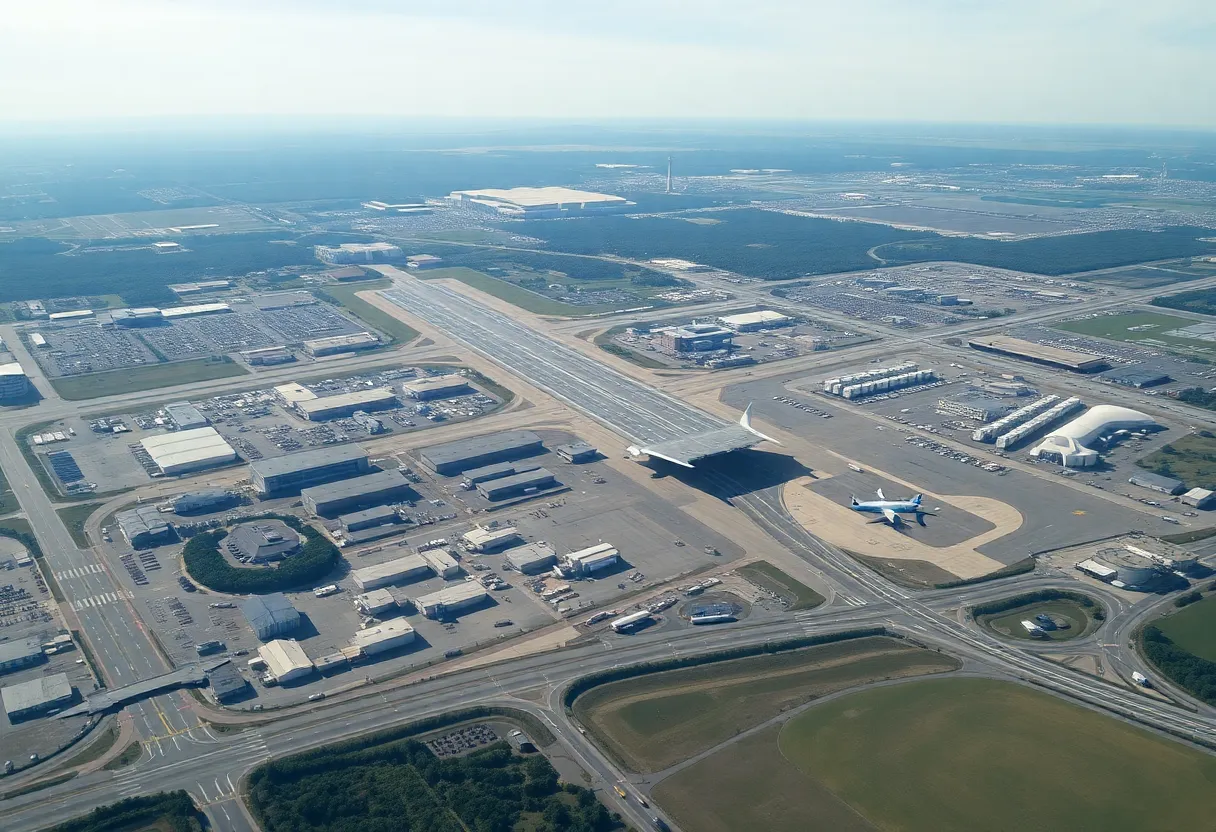
Charlotte Douglas International Airport’s significant rezoning proposal aims to transform 385 acres of land for manufacturing and logistics, fostering regional economic growth across the Carolinas. This effort is expected to enhance land utilization and attract investment, while also addressing community concerns about potential impacts on local neighborhoods.
Charlotte, NC
Carolina Gateway: CLT’s Expansion & Regional Economic Growth
A significant rezoning proposal by Charlotte Douglas International Airport signals a robust new chapter for regional commerce, poised to reshape land use and spur considerable economic activity across the Carolinas, including potential ripple effects for Columbia SC business and Midlands economic growth.
In a move reflecting a sustained commitment to economic dynamism, Charlotte Douglas International Airport (CLT) is advancing a substantial rezoning initiative. This undertaking aligns with broader trends of strategic infrastructure development aimed at fostering entrepreneurial innovation and supporting the resilience of small businesses through enhanced logistics and industrial capabilities. Such projects underscore the imperative for communities to consider efficient land use and streamlined regulatory processes as catalysts for accelerating business growth and attracting private investment.
The vision behind expanding critical transportation hubs like CLT often extends beyond immediate borders, creating a more interconnected and prosperous regional economy. For residents and businesses across the Carolinas, understanding these developments offers valuable insights into the evolving landscape of commerce, job creation, and the opportunities that arise when strategic planning meets market demand.
CLT: A Major Economic Engine for the Carolinas
Charlotte Douglas International Airport stands as a pivotal economic driver, not only for its immediate vicinity but also for the broader region. In 2023, the airport contributed an impressive $40 billion to the North and South Carolina economies. This substantial figure underscores the critical role that major transportation infrastructure plays in supporting countless jobs, facilitating trade, and attracting new enterprises. The North Carolina Department of Transportation’s Division of Aviation reported that all 72 airports in the Tar Heel State had a combined economic impact exceeding $88 billion in 2023, with CLT alone accounting for nearly $37 billion of that total. This demonstrates the significant contribution of aviation to the state’s Gross Domestic Product, representing 11% of the total.
Proposed Rezoning: A 385-Acre Industrial Vision
The city of Charlotte, which owns Charlotte Douglas International Airport, recently filed a rezoning request for a vast 385-acre vacant wooded site located south of the airport. This area is currently zoned for residential development but is proposed to be changed to an ML-2 Manufacturing and Logistics Zoning district, which would permit heavy industrial uses. The land in question is bordered by West Boulevard, Interstate 485, Shopton Road, and Steele Creek Road, encompassing approximately 165 parcels owned by the city and the airport.
This initiative is part of a larger strategy to develop a new industrial park or a logistics and distribution hub. Such a hub is envisioned to include manufacturing facilities, industrial operations, offices, and commercial buildings, aiming to strengthen the west Charlotte office and IT sub-market. The airport’s strategic development plans, including Project AMP launched in 2015, have long identified areas around CLT for compatible economic activity, focusing on land re-use and generating non-aeronautical revenue to maintain financial self-sufficiency.
Unlocking Logistics and Manufacturing Potential
The proposed rezoning and subsequent development align with a forward-thinking approach to capitalize on Charlotte’s robust connectivity. By designating this significant acreage for manufacturing and logistics, the airport aims to attract businesses requiring direct access to air, road (via I-485), and rail (through the Norfolk Southern Intermodal Facility) transportation networks. This creates an environment ripe for private investment and the expansion of key industries such as warehousing, transportation, and distribution.
The transformation of vacant land into productive industrial space not only fosters job creation but also enhances the region’s competitiveness. Historically, strategic land re-classification can lead to substantial increases in property value, as commercial and industrial utility often surpasses residential valuations, highlighting the economic upside for public assets when developed thoughtfully.
Navigating Growth and Community Interests
While the economic benefits of such a large-scale development are clear, these projects often involve complex considerations for nearby communities. Residents in areas like Steeleberry Acres, adjacent to the proposed rezoning, have expressed concerns regarding potential displacement, noise pollution, environmental impacts, and the preservation of historic properties. The airport’s ongoing expansion has involved the acquisition of residential properties, a process that sometimes leads to unease among homeowners about fair compensation and the loss of established neighborhoods.
It is worth noting that a previous, separate rezoning request for a smaller 49-acre forested area near Steeleberry Acres was withdrawn by Charlotte Douglas International Airport officials in early 2025, citing a “lack of capacity for future projects in the area.” This decision temporarily paused those specific plans. Large-scale developments like these require careful consideration and balanced approaches to address both economic imperatives and community well-being, reflecting the intricate balance local governments navigate in fostering growth.
Strategic Development: A Blueprint for Regional Prosperity
The Charlotte Douglas International Airport’s Airport Area Strategic Development Plan (AASDP) and Project AMP underscore a long-term vision for sustainable growth. These plans prioritize placing vacant and underutilized airport property into productive use, ensuring compatibility with aviation operations, and generating revenue to support the airport’s self-sufficiency. The potential to expand the Federal Trade Zone (FTZ) to include airport property, creating a tax relief business zone, further sweetens the appeal for businesses looking to invest in the area.
For South Carolina entrepreneurs and Columbia small business owners, the expansion of a major logistics hub nearby represents both a challenge and an opportunity. While it enhances regional connectivity, it also emphasizes the need for South Carolina’s Richland County economy to remain agile, innovative, and focused on creating competitive advantages. The lessons learned from Charlotte’s ambitious development projects can inform our own strategies for sustainable Midlands economic growth, promoting environments where businesses can thrive with minimal regulatory burdens and robust infrastructure.
Looking Ahead: Supporting a Dynamic Economic Future
The Charlotte Douglas International Airport’s rezoning effort is a testament to the dynamic economic forces shaping the Carolinas. It highlights the power of strategic planning and private sector engagement in transforming dormant land into vibrant centers of commerce and employment. As the region continues to grow, such initiatives will be crucial in maintaining a competitive edge and providing opportunities for businesses and individuals alike.
We encourage our readers to stay informed and engaged in the economic developments shaping our broader region. Supporting local businesses in Columbia and advocating for policies that foster entrepreneurial spirit and efficient growth remain vital for our community’s continued prosperity.
Frequently Asked Questions About the CLT Airport Rezoning
- What is the Charlotte Douglas International Airport proposing?
- The Charlotte Douglas International Airport, owned by the city of Charlotte, is proposing to rezone a 385-acre vacant wooded site south of the airport. This area is currently zoned for residential development and is intended to be changed to an ML-2 Manufacturing and Logistics Zoning district, allowing for heavy industrial uses.
- Where is the 385-acre site located?
- The site is located south of Charlotte Douglas International Airport, bordered by West Boulevard, Interstate 485, Shopton Road, and Steele Creek Road.
- What is the purpose of this rezoning?
- The purpose is to create a new industrial park or a logistics and distribution hub, which could include manufacturing, industrial, office, and commercial buildings. This aims to strengthen the west Charlotte office and IT sub-market and facilitate airport-connected development.
- What is the economic impact of Charlotte Douglas International Airport?
- In 2023, Charlotte Douglas International Airport contributed $40 billion to the North and South Carolina economies. It accounted for nearly $37 billion of the more than $88 billion economic impact from all 72 North Carolina airports, which collectively transported 74.3 million passengers in 2023.
- Have there been community concerns about airport expansion?
- Yes, residents in nearby neighborhoods like Steeleberry Acres have expressed concerns about potential displacement, noise pollution, environmental impacts, and the preservation of historic properties due to airport expansion plans.
Key Features of the CLT Airport Rezoning
| Feature | Details |
|---|---|
| Location | South of Charlotte Douglas International Airport, bordered by West Boulevard, I-485, Shopton Road, and Steele Creek Road. |
| Size | Approximately 385 acres. |
| Current Zoning | Residential development. |
| Proposed Zoning | ML-2 Manufacturing and Logistics Zoning district (heavy industrial uses). |
| Purpose | To create a new industrial park/logistics and distribution hub for manufacturing, industrial, office, and commercial buildings. |
| Ownership | City of Charlotte and Charlotte Douglas International Airport. |
| Economic Contribution (CLT) | $40 billion to North and South Carolina economies in 2023. Nearly $37 billion of North Carolina’s total airport economic impact in 2023. |
| Community Impact | Concerns from residents regarding displacement, noise, environmental impact, and historic preservation in nearby Steeleberry Acres. |
Deeper Dive: News & Info About This Topic
HERE Resources
Charlotte Activates Extreme Weather Protocols for Homeless Support
Charges Dismissed Against Cristobal Maltos in Immigration Case
Record North Carolina Train Ridership Signals Growing Preference
Charlotte Brings Holiday Cheer with Festive Events
Charlotte Douglas International Airport Resumes Normal Operations
Charlotte Airport Resumes Operations Amid Safety Concerns
Charlotte City Council to Hold Special Meeting
Dalfen Industrial Expands Its Reach with New Charlotte Fulfillment Center
Winter Weather Triggers Remote Learning for NC School Districts
Owensboro-Daviess County Regional Airport Launches New Direct Flight to Charlotte

Author: HERE Charlotte
The CHARLOTTE STAFF WRITER represents the experienced team at HERECharlotte.com, your go-to source for actionable local news and information in Charlotte, Mecklenburg County, and beyond. Specializing in "news you can use," we cover essential topics like product reviews for personal and business needs, local business directories, politics, real estate trends, neighborhood insights, and state news affecting the area—with deep expertise drawn from years of dedicated reporting and strong community input, including local press releases and business updates. We deliver top reporting on high-value events such as Lovin' Life Music Festival, Charlotte Pride festival, and major sporting tournaments at Bank of America Stadium. Our coverage extends to key organizations like the Charlotte Regional Business Alliance and Foundation for the Carolinas, plus leading businesses in finance and entertainment that power the local economy such as Bank of America and NASCAR. As part of the broader HERE network, including HEREAsheville.com, HEREGreensboro.com, HERERaleigh.com, and HEREOBX.com, we provide comprehensive, credible insights into North Carolina's dynamic landscape.