
Charlotte, December 20, 2025
In Charlotte, educators are ramping up efforts to address persistent academic setbacks caused by the pandemic. Reports reveal students remain behind in core subjects like reading and mathematics, with significant challenges in social-emotional well-being. Recent strategic initiatives aim to improve performance while combating issues like chronic absenteeism and mental health concerns. North Carolina’s ambitious five-year plan seeks to elevate public schools by 2030, focusing on graduation rates, test scores, and student support. Ongoing recovery efforts highlight the resilience and adaptability of educators amidst these challenges.
Charlotte: Educators Continue Dedicated Efforts to Address Lingering Pandemic Learning Gaps
Charlotte and North Carolina educators are intensifying their efforts to mitigate the persistent effects of pandemic-related learning disruptions, even as state and national data reveal ongoing challenges. Five years after the initial onset of the COVID-19 pandemic, students across various grade levels continue to grapple with academic setbacks, particularly in core subjects like reading and mathematics, alongside significant impacts on their social-emotional well-being. Latest reports from October 2025 highlight a strategic push by North Carolina education leaders, including the State Superintendent, to address these issues head-on with an ambitious plan for the state’s public schools.
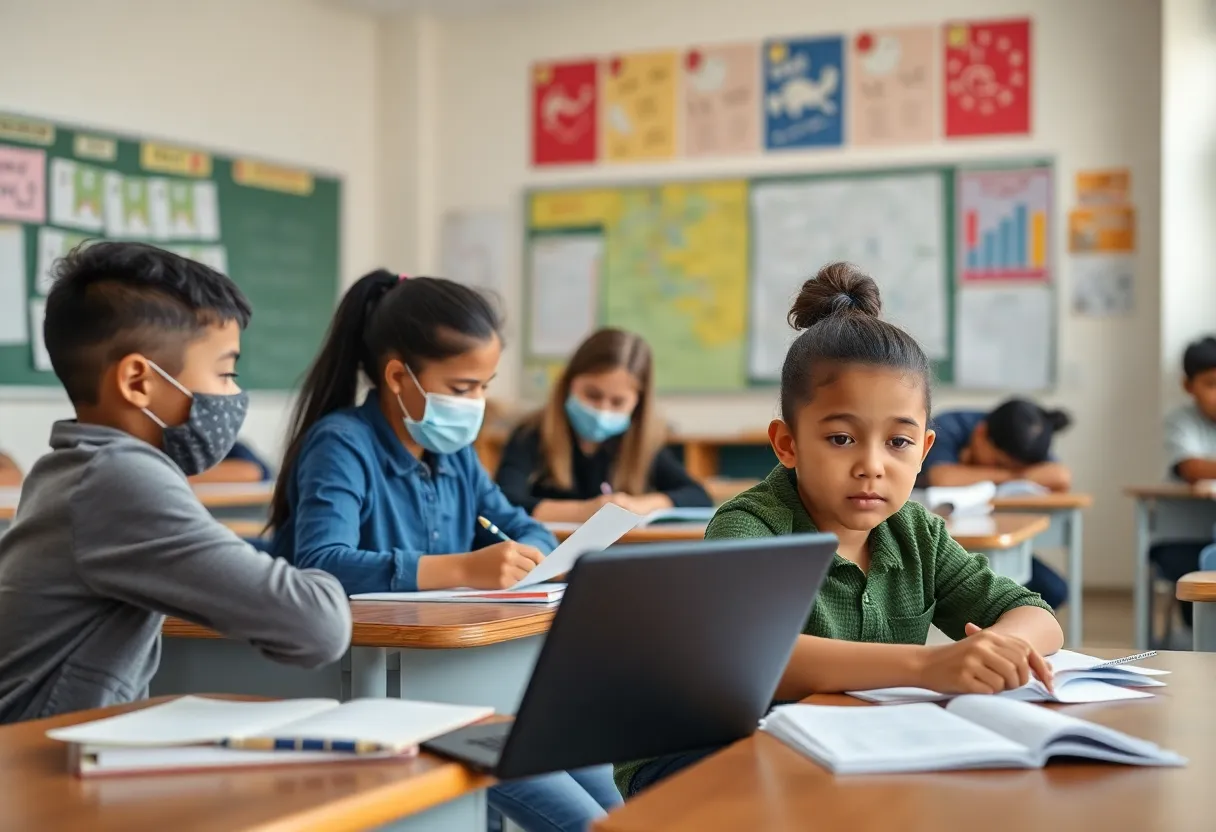
Across North Carolina, student achievement remains below pre-pandemic benchmarks. For instance, national surveys from 2025 indicate that student performance in mathematics is approximately half a grade level behind 2019 levels, and about three-quarters of a grade level behind in reading. These academic lags are particularly concerning for fourth-grade reading and middle school performance statewide.
Addressing Persistent Absenteeism and Mental Health Concerns
A major obstacle hindering learning recovery efforts is the elevated rate of chronic student absenteeism. In North Carolina, the percentage of students chronically absent, defined as missing 10% or more of school days, significantly increased from 16% in 2019 to 27% by 2023. This issue is particularly pronounced in high-poverty school districts. Initiatives to combat this include changing how parents notify schools of absences and using incentives or other measures to encourage attendance.
Beyond academics, the pandemic has left a substantial mark on students’ mental health and social-emotional development. Many students experienced increased stress, isolation, anxiety, and depression due to remote learning and disruptions to extracurricular activities. Educators have taken on expanded roles, providing crucial emotional support to students grappling with these issues. Furthermore, children born during the pandemic years (2020 or 2021) are now entering preschool and kindergarten, with some exhibiting speech and language delays due to early exposure to masks and limited social interaction. While experts note children’s resilience, they emphasize that rebuilding confidence can take years.
Strategic Plans and Targeted Interventions
Charlotte-Mecklenburg Schools (CMS) officials, as of August 2025, report positive trends, with students showing gains and a narrowing of gaps in math and reading. The district expects new student performance data for the 2024-2025 school year to be publicly released in early September.
North Carolina’s comprehensive five-year strategic plan, “Achieving Educational Excellence,” unveiled in October 2025, aims to elevate the state’s public schools to national leadership by 2030. Key objectives include a 92% four-year graduation rate (up from 86.9%), an ACT composite score of 20 (currently 18.5), and increased participation in Advanced Placement (AP) and Career Technical Education (CTE) programs. The plan also prioritizes mental health support, safer school environments, and enhanced engagement with families and communities.
Nationwide, schools have implemented various strategies to address unfinished learning, including in-school and after-school tutoring, summer school programs, and a focus on social-emotional well-being. However, a January 2025 survey of educators indicated that learning recovery has not been as rapid as hoped, with “unfinished learning” still categorized as moderate or severe for many students across subjects and grade levels. Challenges in implementing large-scale, high-dosage tutoring have been noted.
The persistence of teacher shortages and burnout also continues to impact recovery efforts. Many educators experienced immense pressure during and after the pandemic, leading to increased stress and a significant number leaving the profession. Fewer individuals are pursuing teaching careers, creating a gap between incoming new teachers and seasoned professionals stepping away.
Moving Forward: Continued Support and Adaptability
Despite the expiration of billions of dollars in federal COVID-19 aid, North Carolina education officials and researchers emphasize that pathways for post-pandemic learning recovery persist. These include continued efforts to reduce chronic absenteeism, expand support for tutoring programs, and enhance math and language arts instruction. The extension of phonics-based “science of reading” literacy instruction into middle schools is also under consideration. Parents are encouraged to communicate with teachers and seek additional help, such as summer learning or tutoring, if their children are performing below grade level. The resilience and adaptability demonstrated by educators throughout these unprecedented times remain crucial in shaping students’ learning experiences.
Frequently Asked Questions (FAQ)
- What are the primary academic challenges students face post-pandemic?
- Students are primarily struggling with academic setbacks in core subjects such as reading and mathematics, with national surveys indicating performance is approximately half a grade level behind 2019 levels in math and about three-quarters of a grade level behind in reading.
- How has chronic absenteeism impacted learning recovery in North Carolina?
- Chronic student absenteeism has significantly increased in North Carolina, with 27% of students missing 10% or more of school days by 2023, up from 16% in 2019. This is a major obstacle to catching up on lost learning time.
- What mental health effects are being observed in students who experienced the pandemic?
- Many students experienced increased stress, isolation, anxiety, and depression due to remote learning and disruptions to extracurricular activities. Additionally, some children born during the pandemic are exhibiting speech and language delays.
- What is North Carolina’s “Achieving Educational Excellence” plan?
- North Carolina’s “Achieving Educational Excellence” is a five-year strategic plan, unveiled in October 2025, aiming to make the state’s public schools the best in the nation by 2030. It includes goals for graduation rates, ACT scores, AP/CTE participation, mental health support, and educator compensation.
- Are teacher shortages still a concern?
- Yes, teacher shortages and burnout continue to be a concern, impacting recovery efforts. Many educators left the profession due to high stress, and fewer individuals are pursuing teaching careers.
Key Features of Post-Pandemic Educational Recovery Efforts
| Feature | Description | Scope |
|---|---|---|
| Academic Gaps | Student achievement remains below pre-pandemic levels; math approximately half a grade level behind 2019, reading three-quarters of a grade level behind 2019. | Nationwide |
| Chronic Absenteeism | Significant increase in students missing 10% or more of school days (NC: 16% in 2019 to 27% in 2023). | State-level (North Carolina) |
| Mental Health Impacts | Increased stress, anxiety, depression, and social-emotional challenges among students. | Nationwide |
| “COVID Kids” Challenges | Children born during 2020-2021 are entering school with observed speech and language delays. | Local (Charlotte, Union County) |
| North Carolina Strategic Plan | “Achieving Educational Excellence” aims for NC public schools to be best in nation by 2030, with goals for graduation rates, test scores, and student support. | State-level (North Carolina) |
| Teacher Workforce | Persistent teacher shortages and burnout, with many educators leaving the profession due to high stress. | Nationwide |
| Interventions | Tutoring, summer school, and social-emotional support are being implemented, though recovery has been slower than anticipated. | Nationwide |
Deeper Dive: News & Info About This Topic
HERE Resources
Former Teacher Launches Free Online Lessons Amid Student Absences
Charlotte-Mecklenburg Schools Show Academic Progress
Charlotte-Mecklenburg Schools Achieve Academic Gains
Florida Surgeon General Proposes Elimination of Vaccine Mandates
Charlotte-Mecklenburg Schools Achieve Historic Academic Progress
Charlotte-Mecklenburg Schools Reports Gains in Early Literacy
North Carolina Schools Transition to Infinite Campus System
Charlotte City Council Member Indicted for COVID-19 Fraud
Charlotte Council Member Indicted for COVID-19 Fraud
Charlotte City Council Member Indicted on COVID Loan Fraud Charges

Author: HERE Charlotte
The CHARLOTTE STAFF WRITER represents the experienced team at HERECharlotte.com, your go-to source for actionable local news and information in Charlotte, Mecklenburg County, and beyond. Specializing in "news you can use," we cover essential topics like product reviews for personal and business needs, local business directories, politics, real estate trends, neighborhood insights, and state news affecting the area—with deep expertise drawn from years of dedicated reporting and strong community input, including local press releases and business updates. We deliver top reporting on high-value events such as Lovin' Life Music Festival, Charlotte Pride festival, and major sporting tournaments at Bank of America Stadium. Our coverage extends to key organizations like the Charlotte Regional Business Alliance and Foundation for the Carolinas, plus leading businesses in finance and entertainment that power the local economy such as Bank of America and NASCAR. As part of the broader HERE network, including HEREAsheville.com, HEREGreensboro.com, HERERaleigh.com, and HEREOBX.com, we provide comprehensive, credible insights into North Carolina's dynamic landscape.