

Columbia, SC, December 24, 2025
The textile industry, despite its evolution, exemplifies resilience and innovation—key lessons for Columbia, SC’s business community. Companies like Parkdale Mills demonstrate how strategic adaptation and technological integration can foster sustainable economic growth. As South Carolina’s manufacturing landscape diversifies, particularly in Columbia, the focus on supporting small businesses and entrepreneurs becomes pivotal for economic vitality.
Innovation & Grit: Textile Lessons for Columbia’s Economic Future
In the evolving narrative of American enterprise, the textile industry, despite dramatic shifts, offers compelling examples of resilience and innovation. This enduring spirit provides valuable lessons for the Columbia SC business community, showcasing how a commitment to strategic adaptation and forward-thinking can drive sustainable Midlands economic growth.
The ability of businesses to navigate economic challenges often highlights the power of private sector ingenuity. By prioritizing innovation, integrating advanced technologies, and responding to changing market demands, companies can not only endure periods of disruption but also emerge stronger. These principles are particularly pertinent for South Carolina entrepreneurs and Columbia small business owners who continuously seek paths to success and expansion in a dynamic environment.
A Century of Strategic Evolution: The Parkdale Mills Journey
The story of Parkdale Mills, founded in 1916 in Gastonia, North Carolina, illustrates how a long-established manufacturing firm can successfully adapt through profound industry changes. Initially established by J. Lee Robinson and J.H. Separk, the company began by producing combed cotton yarn. Over its more than 100-year history, Parkdale Mills has navigated significant economic pressures, including the Great Depression and intense global competition.
A cornerstone of Parkdale Mills’ longevity has been its continuous pursuit of modernization and the application of lean manufacturing principles. The company has made strategic investments in advanced technology and operational efficiencies, recognizing that ongoing improvement is critical for maintaining competitiveness. This proactive approach has enabled Parkdale Mills to retain its position as a significant force in the textile industry, even as many other domestic manufacturers faced closure.
Pioneering Innovation in Textile Production
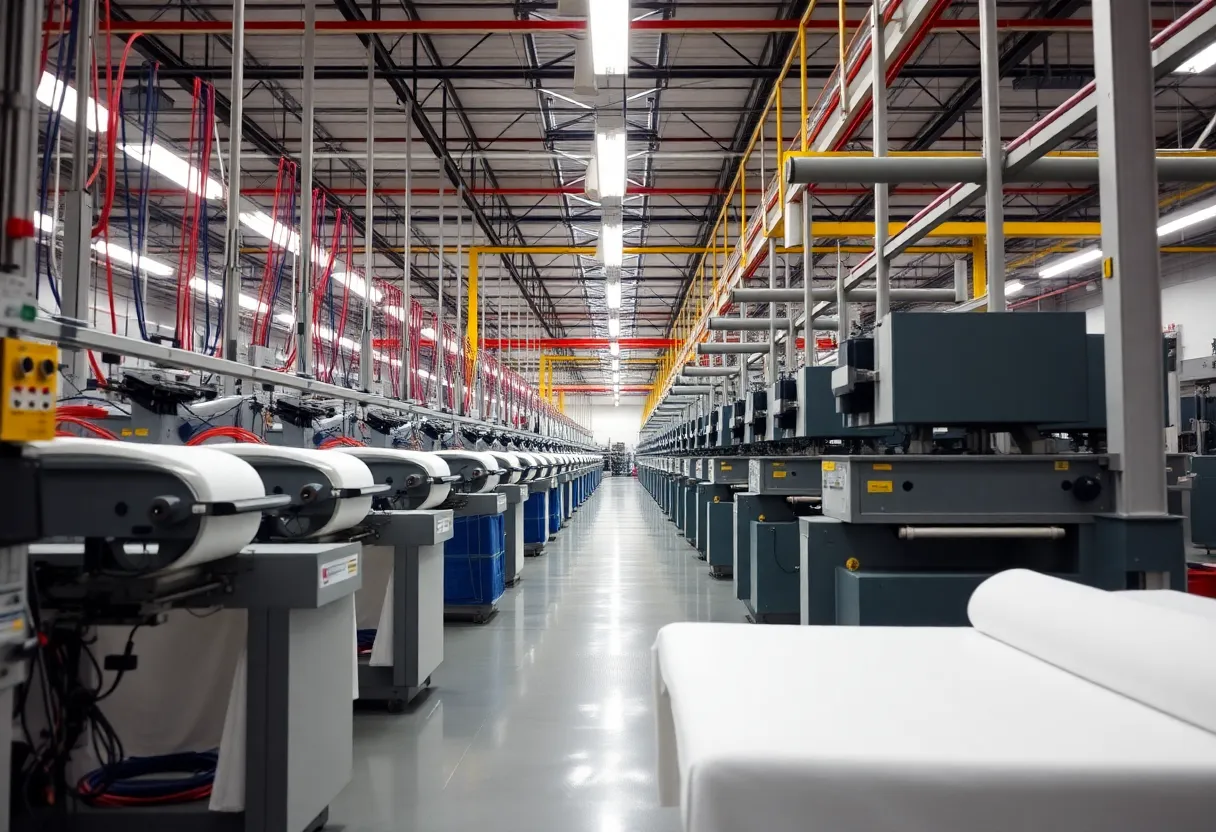
Parkdale Mills has consistently demonstrated a dedication to innovation, significantly contributing to the advancement of textile technology. The company was an early adopter of automation and robotics across its operations, leading to improved efficiency and consistent product quality. Additionally, Parkdale Mills was among the first independent yarn spinners in the United States to install new, more efficient equipment in 1972 and pioneered climate-controlled manufacturing facilities, aimed at enhancing workplace conditions and boosting competitiveness.
Diversification has also been a crucial element of their strategy. Responding to evolving consumer preferences and material science, Parkdale Mills expanded its product offerings to include blended yarns and synthetic fibers. In 2008, the company further broadened its market reach and product portfolio by acquiring U.S. Cotton, LLC, which became a leading supplier of private label cotton-based consumer products to major retail chains across the Americas. This acquisition solidified Parkdale Mills as the largest consumer of cotton in the United States.
Beyond conventional textiles, Parkdale Mills is actively engaged in fiber innovation and polymer solutions through its advanced materials division. This includes developing pioneering technologies such as CiCLO, which is designed to reduce plastic microfiber pollution, reflecting a proactive commitment to environmental sustainability within the industry. This focus on research and development highlights a forward-thinking business model aimed at creating innovative solutions for current industry challenges and anticipating future market demands.
Navigating Nationwide Industry Headwinds
The U.S. textile industry, Nationwide, has contended with a range of challenges, including intense global competition, fluctuating raw material costs, and complex trade policies. Issues such as predatory trade practices, the use of forced labor in supply chains, and post-pandemic inventory imbalances have exerted considerable pressure on domestic manufacturers. Despite these obstacles, the industry has shown remarkable resilience and continues to make substantial contributions to the national economy. In 2024, Nationwide employment in the textile supply chain stood at 471,046, with the value of shipments for U.S. textiles and apparel reaching $63.9 billion.
Parkdale Mills, under leadership like Charles Heilig, who also served as Chairman of the National Council of Textile Organizations (NCTO), has been an active participant in addressing these challenges. The company’s strategic decisions to invest in advanced technology and expand its operational footprint, including significant investments in South Carolina’s Edgefield County and a new yarn plant in Cherokee County in 2010, demonstrate a strong commitment to domestic production and innovation.
South Carolina’s Manufacturing Transformation
South Carolina’s manufacturing sector, State-level, has experienced its own profound transformation, shifting from a historical reliance on textile mills to a diversified advanced manufacturing industry. The Palmetto State is now home to over 6,000 manufacturing companies, establishing it as a globally competitive and export-oriented economic base. This sector is a primary driver for the state’s economic growth, contributing an estimated between $194 billion and $206 billion annually to the State-level economy and directly or indirectly supporting over 30 percent of all jobs in South Carolina.
The state has introduced a 2025 vision for manufacturing, with a focus on innovation and job growth to enhance economic competitiveness. This vision involves collaborative initiatives among policymakers, industry leaders, and other stakeholders to fortify the state’s economic foundations. South Carolina’s commitment to advanced manufacturing is evident in its consistently high growth rates in manufacturing employment, which have surpassed the state average over the past decade.
Columbia: A Nurturing Environment for Entrepreneurial Growth
The spirit of entrepreneurial innovation exemplified in industries like textiles resonates strongly within Columbia, SC. The city actively cultivates a robust environment for small businesses and startups through a variety of initiatives and partnerships. Programs such as SC LAUNCH provide structured frameworks for emerging companies in advanced manufacturing, information technology, and life sciences. The Small Business Development Center offers free private consulting, resources, and seminars to help businesses start, grow, and succeed.
The City of Columbia’s Office of Business Opportunities is dedicated to supporting small, minority, veteran, and women-owned businesses by providing creative financing, technical assistance, and capacity-building resources. These collaborative efforts underscore Columbia’s dedication to fostering job creation and economic diversification, positioning it as a key player in Midlands economic growth. The resilience and proactive strategies of Columbia small business owners, combined with supportive local and State-level programs, are fundamental for a thriving local economy.
Conclusion
The century-long journey of companies like Parkdale Mills, marked by industrial evolution, offers a compelling blueprint for entrepreneurial success—a narrative deeply rooted in innovation, adaptability, and an unwavering commitment to quality. Their story, alongside the broader revitalization of manufacturing across South Carolina, provides a powerful example for South Carolina entrepreneurs.
In Columbia, a similar spirit of enterprise and strategic support is fueling our local economy. From burgeoning startups to established small businesses, the city’s dedication to fostering a dynamic environment through practical resources and community engagement ensures continued vitality. We encourage all residents to support local businesses and engage with initiatives that promote Columbia SC business development, contributing to a robust and prosperous future for the Richland County economy.
Frequently Asked Questions About Business Growth and Textile Industry Resilience
- What is Parkdale Mills known for?
- Parkdale Mills is known for its long history in textile manufacturing, its relentless pursuit of modernization and lean manufacturing principles, and its consistent commitment to innovation and advanced textile technology.
- How has Parkdale Mills adapted to changes in the textile industry?
- Parkdale Mills has adapted by investing in automation and robotics, diversifying into blended yarns and synthetic fibers, acquiring U.S. Cotton, LLC to expand into consumer products, and developing advanced materials and sustainable solutions like CiCLO technology.
- What are some Nationwide challenges faced by the U.S. textile industry?
- The U.S. textile industry, Nationwide, faces challenges including intense global competition, fluctuating raw material costs, complex trade policies, predatory trade practices, the use of forced labor in supply chains, and post-pandemic inventory struggles.
- What is the economic impact of manufacturing in South Carolina (State-level)?
- Manufacturing in South Carolina, State-level, contributes between $194 billion and $206 billion annually to the State-level economy and supports over 30 percent of all jobs in South Carolina.
- How does Columbia, SC, support entrepreneurial growth?
- Columbia, SC, supports entrepreneurial growth through various initiatives and partnerships, including SC LAUNCH for emerging companies, the Small Business Development Center for consulting, and the City of Columbia’s Office of Business Opportunities for financing and technical assistance for small, minority, veteran, and women-owned businesses.
Key Features of Textile Industry Resilience & Columbia’s Economic Growth
| Feature | Description | Scope |
|---|---|---|
| Parkdale Mills Founding | Established in 1916 in Gastonia, North Carolina, beginning its journey in textile manufacturing. | Local (Gastonia, NC) |
| Innovation in Manufacturing | Early adoption of automation, robotics, and climate-controlled facilities. Investment in R&D for advanced materials and sustainable solutions like CiCLO technology. | Company-level, Nationwide impact |
| Diversification Strategy | Expansion into blended yarns, synthetic fibers, and consumer cotton products through the acquisition of U.S. Cotton, LLC. | Company-level, Nationwide impact |
| U.S. Textile Industry Challenges | Nationwide challenges include global competition, fluctuating raw material costs, complex trade policies, predatory trade practices, the use of forced labor in supply chains, and post-pandemic inventory struggles. | Nationwide |
| South Carolina Manufacturing Sector | A diversified and globally competitive advanced manufacturing industry that contributes significantly to the State-level economy and employment. | State-level |
| Columbia, SC Entrepreneurial Support | Active programs and partnerships, such as SC LAUNCH, Small Business Development Center, and the Office of Business Opportunities, foster small business and startup growth. | Local (Columbia, SC) |
| Economic Contribution of SC Manufacturing | Contributes between $194 billion and $206 billion annually to the State-level economy, supporting over 30 percent of all jobs in South Carolina. | State-level |
Deeper Dive: News & Info About This Topic
HERE Resources
Columbia’s Community Spirit Shines Bright Post-Holiday
Midlands Economic Horizon Brightens: Strategic Investments Drive Growth
National Acquisition Highlights Growth in Logistics Support for Entrepreneurs
Columbia’s Path to Economic Growth Through Private Investment
Columbia’s Economy Surges: Innovation Fuels Growth
JPMorgan Chase Expands into Coastal North Carolina: Impact on Columbia
Columbia Hosts Vibrant New Year’s Eve Celebrations
Charlotte’s WinterFest Lights Up Holidays
Charlotte Faces Multiple Tragedies and Community Victories
The Entrepreneurial Spirit of Columbia, SC Drives Economic Growth

Author: HERE Charlotte
The CHARLOTTE STAFF WRITER represents the experienced team at HERECharlotte.com, your go-to source for actionable local news and information in Charlotte, Mecklenburg County, and beyond. Specializing in "news you can use," we cover essential topics like product reviews for personal and business needs, local business directories, politics, real estate trends, neighborhood insights, and state news affecting the area—with deep expertise drawn from years of dedicated reporting and strong community input, including local press releases and business updates. We deliver top reporting on high-value events such as Lovin' Life Music Festival, Charlotte Pride festival, and major sporting tournaments at Bank of America Stadium. Our coverage extends to key organizations like the Charlotte Regional Business Alliance and Foundation for the Carolinas, plus leading businesses in finance and entertainment that power the local economy such as Bank of America and NASCAR. As part of the broader HERE network, including HEREAsheville.com, HEREGreensboro.com, HERERaleigh.com, and HEREOBX.com, we provide comprehensive, credible insights into North Carolina's dynamic landscape.