
Charlotte, February 15, 2026
A quick-thinking Charlotte woman performed CPR on her husband, Chad Goddard, who suffered a cardiac arrest at home. Her immediate response and CPR actions, sustained for eight minutes until emergency services arrived, were crucial in saving his life. This event emphasizes the importance of training in CPR and its impact on community health and safety, coinciding with American Heart Month, which promotes awareness for heart health and the necessity of CPR education.
Charlotte
A Charlotte woman’s swift and decisive action, coupled with her knowledge of cardiopulmonary resuscitation (CPR), recently proved instrumental in saving her husband’s life after he suffered a sudden cardiac arrest at their home. Chad Goddard, who maintains a regular exercise routine and had no known prior heart conditions, owes his survival to eight crucial minutes of his wife’s continuous CPR efforts. The incident highlights the profound impact that immediate bystander intervention can have in life-threatening medical emergencies.
Immediate Response Proves Critical for Survival
The dramatic event at the Goddard residence underscores the paramount importance of immediate bystander CPR in significantly improving the outcomes for individuals experiencing out-of-hospital cardiac arrest. Mr. Goddard’s unexpected cardiac arrest, despite his active and seemingly healthy lifestyle, emphasizes that such emergencies can strike anyone, at any time. His wife’s rapid and sustained application of CPR, performed diligently until professional emergency medical services arrived, was a critical factor in preventing severe complications and ultimately preserving his life. This remarkable act of quick thinking and heroism coincides with February’s designation as American Heart Month, serving as a powerful and timely reminder of why widespread CPR training is essential for community safety and individual preparedness.
Understanding Cardiac Arrest and the Lifesaving Power of CPR
Cardiac arrest is a severe medical emergency characterized by the abrupt cessation of the heart’s pumping function, leading to an immediate loss of consciousness, breathing, and blood flow throughout the body. Unlike a heart attack, which is often caused by a blocked artery, cardiac arrest is typically the result of an electrical malfunction in the heart that disrupts its rhythm. Without prompt intervention, specifically CPR, brain damage can commence within a mere four to six minutes, and the likelihood of survival diminishes rapidly with each passing minute.
Studies by organizations such as the American Heart Association consistently show that when CPR is initiated immediately, it can dramatically increase a person’s chances of survival from an out-of-hospital cardiac arrest, often doubling or even tripling them. This immediate blood flow and oxygenation to the brain and other vital organs can buy precious time, maintain essential bodily functions, and significantly improve the patient’s neurological outcome and overall recovery prospects. The ability to perform CPR provides individuals with a tangible way to make a difference in critical moments. Emergency medical professionals, including paramedics, frequently report that the quick actions of bystanders who perform CPR before their arrival are often the most crucial link in the chain of survival.
Community Preparedness and the Broader Impact of CPR Training
The inspiring story of Chad Goddard’s rescue echoes similar accounts across the nation where timely CPR has proven life-altering. For instance, cardiac arrest survivor Kurt Rosalik, whose life was saved through coordinated CPR efforts, recently had the opportunity to meet the Charlotte Fire members who played a role in his successful resuscitation. These stories, along with others such as a case in Charlotte in October 2025 where a husband’s quick thinking and emergency crews saved his wife after her cardiac arrest, collectively underscore the invaluable benefit of widespread CPR education within communities.
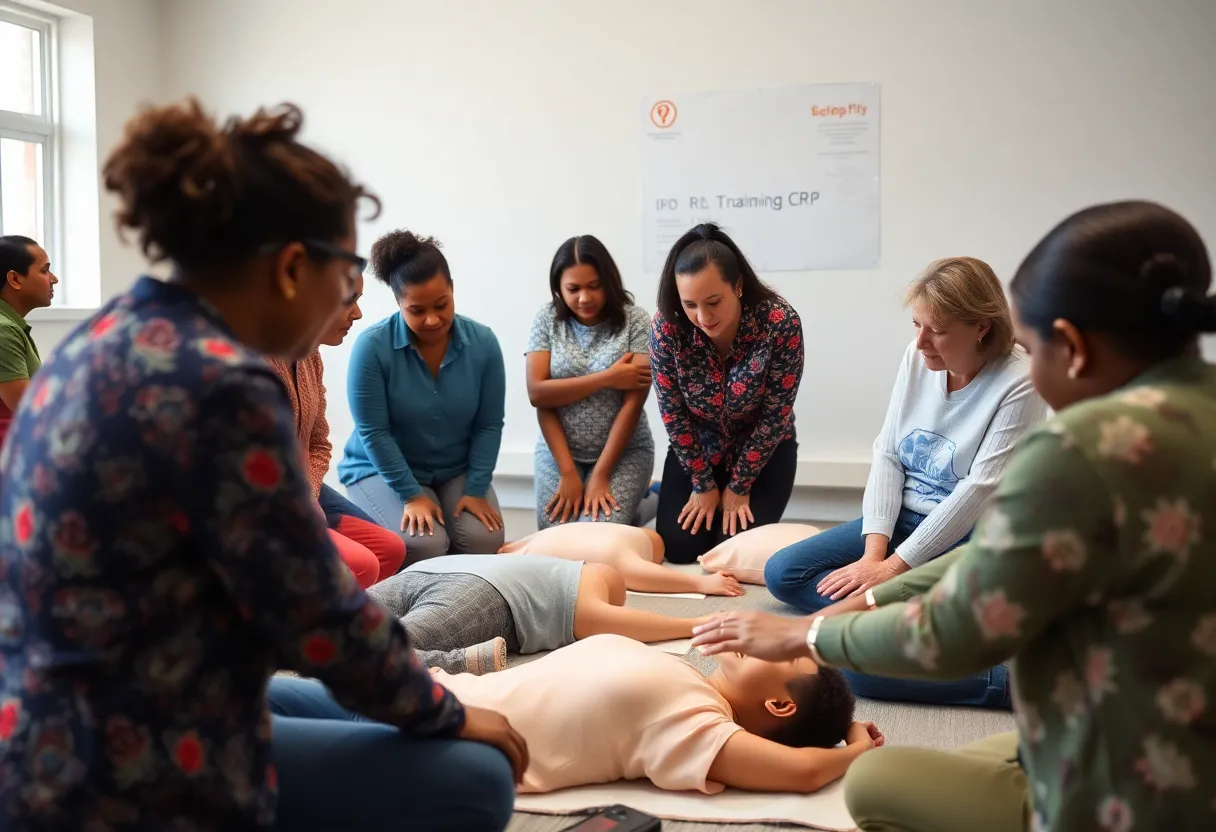
American Heart Month, observed every February, places a significant emphasis on promoting heart health, understanding risk factors for heart disease, and advocating for preventative measures. A key component of this awareness campaign is encouraging individuals to learn life-saving techniques like CPR. Medical experts and public health organizations continuously advocate for broader public access to CPR training programs. They highlight that empowering more individuals with this fundamental skill can transform bystanders into first responders, capable of acting decisively and effectively during an emergency involving a loved one, a friend, or even a stranger.
The success of interventions such as the one performed by Mrs. Goddard serves as a compelling testament to the power of preparedness and the critical impact of basic medical knowledge in emergency situations. It reinforces the idea that quick thinking and the willingness to act can bridge the gap between life and death. This recent event in Charlotte stands as a powerful call to action for more people to consider obtaining CPR certification, turning potential tragedies into narratives of survival and hope, and strengthening the overall resilience of the community in the face of medical crises.
The widespread adoption of CPR training is not just about individual readiness; it’s about building a more resilient and responsive community. Every person trained in CPR becomes a potential lifesaver, contributing to a network of individuals equipped to handle emergencies. This collective capability can dramatically improve survival rates for cardiac arrest victims, making communities safer and more prepared for unexpected health crises. Learning CPR is a relatively simple process that can yield immeasurable benefits, providing individuals with the confidence and skills to act effectively when it matters most.
Frequently Asked Questions
What happened to Chad Goddard?
Chad Goddard experienced a sudden cardiac arrest at his home in Charlotte.
How was Chad Goddard saved?
Chad Goddard was saved by his wife, who performed 8 minutes of continuous CPR until professional medical help arrived.
When did this event occur?
This event occurred recently, as reported within the last 48 hours.
What is American Heart Month?
February is designated as American Heart Month, focusing on raising awareness about heart disease and encouraging preventative measures, including learning life-saving techniques like CPR.
Why is immediate CPR important?
Immediate CPR is critical because without it, brain damage can begin within minutes, and death can occur rapidly. CPR can significantly increase a person’s chances of survival from an out-of-hospital cardiac arrest.
Key Features of Bystander CPR
| Feature | Description | Scope |
|---|---|---|
| Immediate Intervention | CPR initiated within minutes of cardiac arrest significantly improves survival rates. | Nationwide |
| Sustained Effort | Continuous chest compressions are vital until professional medical help arrives. | Nationwide |
| Increased Survival Rates | Bystander CPR can double or triple a person’s chance of survival from out-of-hospital cardiac arrest. | Nationwide |
| Brain Protection | Maintains blood flow to the brain, preventing severe damage during cardiac arrest. | Nationwide |
| Community Preparedness | Widespread CPR training empowers individuals to act in emergencies. | Nationwide |
| American Heart Month | February is dedicated to raising awareness for heart health and CPR education. | Nationwide |
Deeper Dive: News & Info About This Topic
HERE Resources
Medic’s December Response Highlights Emergency Services Demand
Waxhaw Builder’s Inspiring Recovery Journey After Heart Attack

Author: HERE Charlotte
The CHARLOTTE STAFF WRITER represents the experienced team at HERECharlotte.com, your go-to source for actionable local news and information in Charlotte, Mecklenburg County, and beyond. Specializing in "news you can use," we cover essential topics like product reviews for personal and business needs, local business directories, politics, real estate trends, neighborhood insights, and state news affecting the area—with deep expertise drawn from years of dedicated reporting and strong community input, including local press releases and business updates. We deliver top reporting on high-value events such as Lovin' Life Music Festival, Charlotte Pride festival, and major sporting tournaments at Bank of America Stadium. Our coverage extends to key organizations like the Charlotte Regional Business Alliance and Foundation for the Carolinas, plus leading businesses in finance and entertainment that power the local economy such as Bank of America and NASCAR. As part of the broader HERE network, including HEREAsheville.com, HEREGreensboro.com, HERERaleigh.com, and HEREOBX.com, we provide comprehensive, credible insights into North Carolina's dynamic landscape.