
Charlotte, North Carolina, December 24, 2025
Recent federal initiatives, including an Executive Order from President Trump, are poised to significantly impact North Carolina’s growing hemp industry. The order aims to expedite marijuana reclassification and develop a unified approach to hemp-derived cannabinoid products. However, it comes amidst legislation that threatens to outlaw many popular hemp products by 2026. North Carolina, with its $1 billion hemp market and over 1,500 producers, faces an uncertain future as businesses adapt to rapidly shifting regulations.
Charlotte, North Carolina
Recent federal actions have cast a shadow of both potential opportunity and heightened uncertainty over North Carolina’s burgeoning hemp industry. Just days ago, President Donald Trump issued an Executive Order on December 18, 2025, directing federal agencies to accelerate the process of reclassifying marijuana and to develop a unified approach to hemp-derived cannabinoid products. This directive comes as North Carolina’s hemp growers and businesses are already grappling with the implications of recent federal legislation that threatens to outlaw many popular cannabinoid products nationwide by November 2026.
The Executive Order, titled “Increasing Medical Marijuana and Cannabidiol Research,” signals a significant shift in federal drug policy, aiming to expedite the movement of marijuana from Schedule I to Schedule III under the Controlled Substances Act (CSA). Substances classified as Schedule I are deemed to have no currently accepted medical use and a high potential for abuse, while Schedule III substances are recognized for accepted medical uses and a lower potential for abuse and dependence. This reclassification, if finalized, would not federally legalize marijuana for recreational use. However, it is expected to significantly ease barriers to medical research and could allow cannabis businesses to access standard federal tax deductions, relieving a substantial financial burden imposed by current tax laws.
In addition to accelerating marijuana rescheduling, the Executive Order also directs federal agencies, including the Department of Health and Human Services (HHS), the Food and Drug Administration (FDA), and the National Institutes of Health (NIH), to develop research models using real-world evidence to improve access to hemp-derived cannabinoid products and inform standards of care. This part of the order explicitly aims to work with Congress to revise the statutory definition of “final hemp-derived cannabinoid products” to preserve access to “appropriate full-spectrum CBD products” while simultaneously restricting products deemed to pose serious health risks.
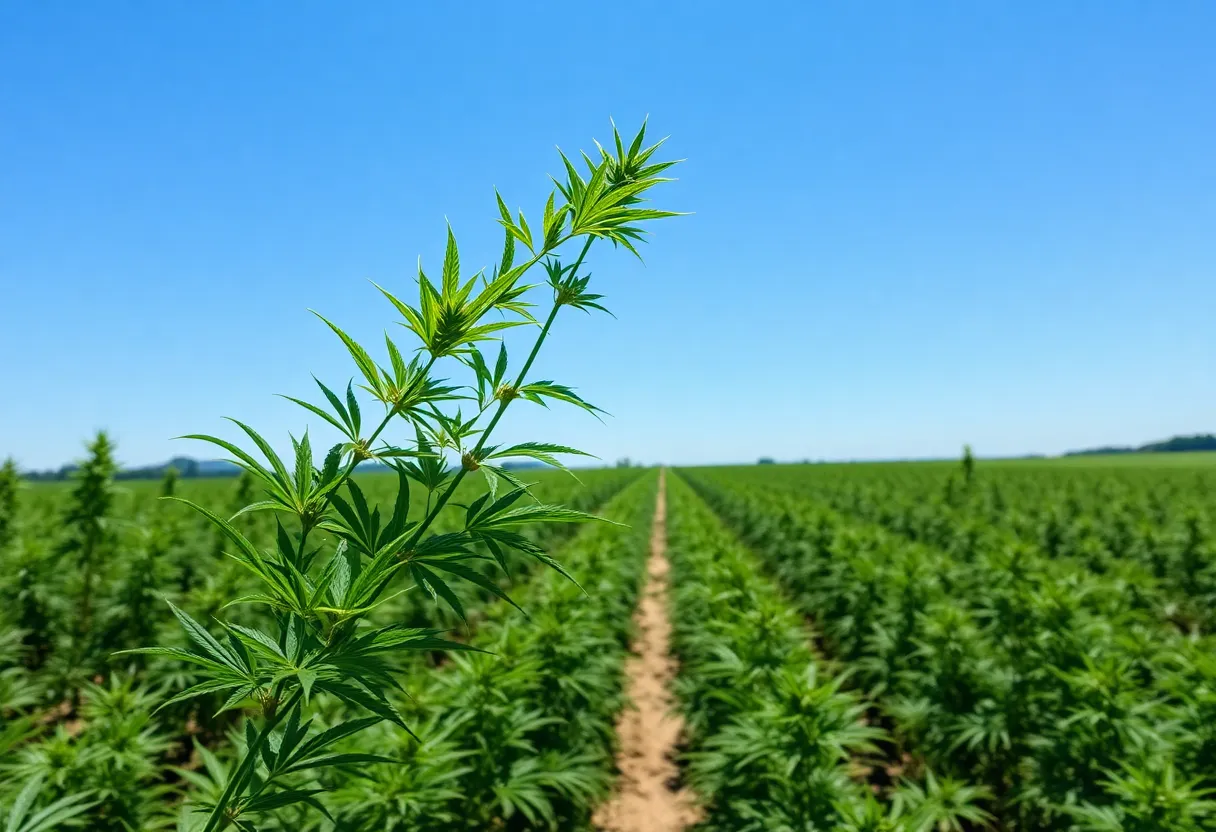
The implications of this executive action are particularly complex for North Carolina, where the hemp industry, valued at an estimated $1 billion, supports over 1,500 producers across the state. These businesses have thrived in a regulatory grey area since the 2018 Farm Bill federally legalized hemp, defined as cannabis containing no more than 0.3% Delta-9 THC on a dry weight basis. This distinction allowed for the proliferation of hemp-derived products, including those containing intoxicating cannabinoids like Delta-8, Delta-10, and THCA flower, which have seen a boom in popularity.
However, a provision tucked into the recently passed FY2026 Agriculture, Rural Development, Food and Drug Administration and Related Agency Appropriations Act (signed into law in November 2025) presents a stark contrast to parts of the new Executive Order. This legislation redefines “hemp” to include a total THC standard of not more than 0.3% on a dry weight basis, encompassing all forms of THC. This new federal definition effectively bans most commercial hemp and cannabinoid products nationwide, particularly those that are synthesized or manufactured outside the plant, or those containing intoxicating cannabinoids, by November 2026.
This federal ban is poised to wipe out a significant portion of North Carolina’s hemp industry, leaving farmers and retailers facing an uncertain future. Businesses that currently sell products like Delta-8, Delta-10, and THCA flower may be forced to shut down, liquidate stock, or attempt to pivot to non-intoxicating products. The new federal restrictions would also legally prevent banks from accepting proceeds from sales of these newly controlled substances, disrupt interstate commerce, and subject businesses to federal controlled-substance tax provisions.
The executive order itself does not immediately reschedule marijuana; rather, it directs the Attorney General to complete the rulemaking process in the most expeditious manner possible. This process involves formal procedures, including potential administrative hearings and public comment periods, and is subject to legal challenges, meaning implementation will take time. Until a final rule is issued and becomes effective, marijuana remains a Schedule I substance under federal law.
In North Carolina, state lawmakers had previously attempted to regulate hemp with House Bill 328 in 2025, which aimed to establish age limits, testing requirements, and a product licensing system. However, these efforts stalled, with a stricter measure mirroring the new federal approach failing to move forward after negotiations. This leaves North Carolina’s hemp industry in a precarious position, caught between a federal executive push for research and refined regulation, and a legislative ban that could dismantle much of its current market.
The coming months will be critical as the federal reclassification process unfolds and the hemp industry seeks further clarity and potential legislative amendments to address the conflicting federal policies. Stakeholders in North Carolina are closely monitoring these developments, understanding that the future landscape of cannabis and hemp remains highly dynamic and uncertain.
Frequently Asked Questions
- What is the recent federal action concerning marijuana and hemp?
- On December 18, 2025, President Donald Trump issued an Executive Order, “Increasing Medical Marijuana and Cannabidiol Research,” directing federal agencies to expedite the reclassification of marijuana from Schedule I to Schedule III under the Controlled Substances Act (CSA) and to develop a unified federal approach to hemp-derived cannabinoid products, including cannabidiol (CBD).
- How does the Executive Order impact marijuana classification Nationwide?
- The Executive Order directs the Attorney General to expedite the movement of marijuana from Schedule I to Schedule III under the Controlled Substances Act (CSA) Nationwide.
- Does the Executive Order legalize recreational marijuana Nationwide?
- No, the reclassification of marijuana to Schedule III, if finalized, would not federally legalize marijuana for recreational use Nationwide.
- What are the potential benefits of rescheduling marijuana to Schedule III Nationwide?
- Rescheduling is expected to significantly ease barriers to medical research and could allow cannabis businesses to access standard federal tax deductions Nationwide, relieving a substantial financial burden imposed by current tax laws.
- What is the conflict with recent federal legislation regarding hemp-derived products Nationwide?
- A provision in the FY2026 Agriculture, Rural Development, Food and Drug Administration and Related Agency Appropriations Act, signed into law in November 2025, redefined “hemp” Nationwide to include a total THC standard of not more than 0.3% on a dry weight basis, encompassing all forms of THC. This new federal definition effectively bans most commercial hemp and cannabinoid products Nationwide, particularly those that are synthesized or manufactured outside the plant, or those containing intoxicating cannabinoids, by November 2026.
- How does this impact North Carolina’s hemp industry specifically?
- North Carolina’s hemp industry, valued at an estimated $1 billion and supporting over 1,500 producers, is at risk, as the federal ban on intoxicating hemp products is poised to wipe out a significant portion of the industry State-level. Businesses that currently sell products like Delta-8, Delta-10, and THCA flower may be forced to shut down, liquidate stock, or attempt to pivot to non-intoxicating products.
- When is the federal ban on intoxicating hemp products set to take effect Nationwide?
- The federal ban on intoxicating hemp products is set to take effect Nationwide by November 2026.
- What has been the recent state-level legislative activity in North Carolina regarding hemp?
- In North Carolina, state lawmakers had previously attempted to regulate hemp with House Bill 328 in 2025, which aimed to establish age limits, testing requirements, and a product licensing system. However, these efforts stalled, with a stricter measure mirroring the new federal approach failing to move forward after negotiations.
Key Features of Federal Cannabis Policy Shifts
| Feature | Description | Geographic Scope |
|---|---|---|
| Executive Order Date | December 18, 2025 | Nationwide |
| Executive Order Goal | Expedite marijuana rescheduling (Schedule I to Schedule III), develop unified federal approach to hemp-derived products, enhance research. | Nationwide |
| Marijuana Rescheduling Impact | Eases research barriers, offers tax relief (Section 280E) for cannabis businesses. Does not legalize recreational use. | Nationwide |
| Recent Federal Legislation | FY2026 Agriculture Appropriations Act (signed November 2025) | Nationwide |
| Hemp Redefinition in Legislation | Total THC standard of not more than 0.3% on a dry weight basis, encompassing all forms of THC. Effectively bans most intoxicating hemp-derived cannabinoids. | Nationwide |
| Effective Date of Hemp Ban | November 2026 | Nationwide |
| North Carolina Hemp Industry Value | Estimated $1 billion | State-level |
| North Carolina Hemp Producers | Over 1,500 producers | State-level |
| State-level Legislative Attempts (NC) | House Bill 328 (2025) for age limits, testing, licensing; stalled. | State-level |
Deeper Dive: News & Info About This Topic
HERE Resources
Charlotte Grapples with Federal Policy Changes
Charlotte Airport Resumes Operations Amid Safety Concerns
Triad Breweries Face New Challenges with Hemp Law Reform
Charlotte’s Economic Pulse: Community Resilience and Innovation
North Carolina’s Hemp Industry Faces New Federal Challenges
Challenges Brewing in Charlotte as Tariffs and Trends Impact Local Breweries

Author: HERE Charlotte
The CHARLOTTE STAFF WRITER represents the experienced team at HERECharlotte.com, your go-to source for actionable local news and information in Charlotte, Mecklenburg County, and beyond. Specializing in "news you can use," we cover essential topics like product reviews for personal and business needs, local business directories, politics, real estate trends, neighborhood insights, and state news affecting the area—with deep expertise drawn from years of dedicated reporting and strong community input, including local press releases and business updates. We deliver top reporting on high-value events such as Lovin' Life Music Festival, Charlotte Pride festival, and major sporting tournaments at Bank of America Stadium. Our coverage extends to key organizations like the Charlotte Regional Business Alliance and Foundation for the Carolinas, plus leading businesses in finance and entertainment that power the local economy such as Bank of America and NASCAR. As part of the broader HERE network, including HEREAsheville.com, HEREGreensboro.com, HERERaleigh.com, and HEREOBX.com, we provide comprehensive, credible insights into North Carolina's dynamic landscape.