

Charlotte, February 18, 2026
The crucial $200 million in disaster mitigation funding from FEMA remains unreinstated, affecting states and localities in their efforts to prepare for natural disasters. This funding is essential for proactive measures to protect communities against hazards such as floods and hurricanes. Its absence puts planned projects at risk, leading to potential delays or cancellations that could leave vulnerable areas exposed.
Charlotte: Crucial $200 Million in Disaster Mitigation Funding Remains Unreinstated by FEMA
As communities across the nation prepare for an increasingly unpredictable future shaped by climate change and natural disasters, a critical allocation of $200 million in disaster mitigation funding from the Federal Emergency Management Agency (FEMA) remains unrestored. This ongoing situation, highlighted recently by a US Representative, has significant implications for states and localities striving to protect infrastructure and save lives before disaster strikes. The absence of these funds directly impacts efforts to build more resilient communities nationwide.
Long-Term Implications of Unreinstated Funds
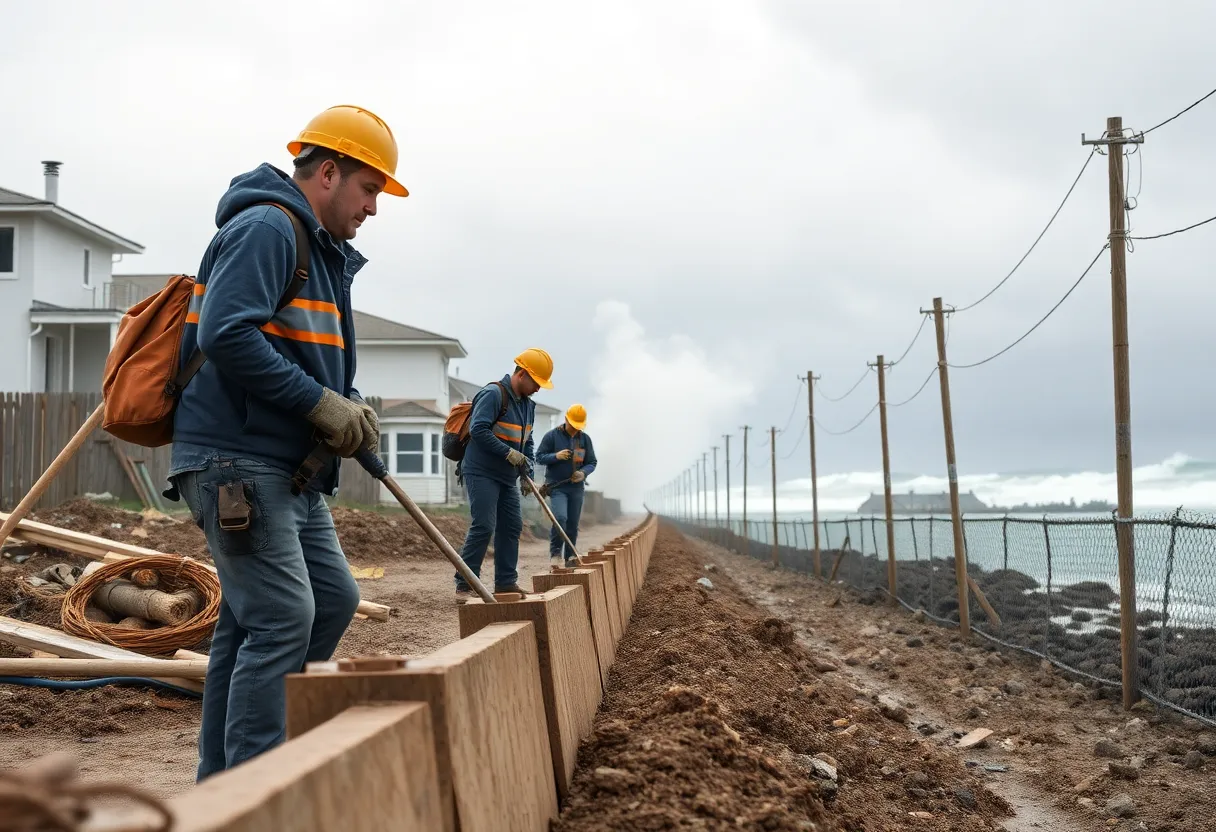
The unreinstated $200 million was originally part of a larger federal effort to help communities proactively mitigate risks from natural hazards. These funds are vital for projects such as strengthening coastal defenses, improving stormwater management systems, and retrofitting critical infrastructure to withstand extreme weather events. Without this specific allocation, many planned or urgently needed projects face delays or cancellation, potentially leaving vulnerable areas exposed to greater damage and loss when disasters occur. The proactive nature of mitigation funding is widely recognized as a cost-effective strategy, preventing far greater expenses associated with post-disaster recovery. Studies consistently demonstrate that every dollar invested in hazard mitigation saves an average of six dollars in future damages.
Understanding Disaster Mitigation Funding
Disaster mitigation refers to sustained actions taken to reduce or eliminate long-term risk to people and property from hazards. FEMA administers various grant programs designed to support these efforts, working in partnership with states, local governments, and tribal nations. These programs are crucial for fostering a culture of preparedness and resilience, enabling communities to reduce their susceptibility to floods, hurricanes, wildfires, earthquakes, and other catastrophic events. The funds facilitate comprehensive planning, hazard identification, and the implementation of protective measures. This strategic investment is not merely about physical infrastructure; it also supports public awareness campaigns and the development of local capacity to manage and respond to hazards effectively.
The specific $200 million in question was previously a component of a broader federal commitment to bolstering the nation’s defenses against natural hazards. Its current unreinstated status represents a gap in the funding available for critical preventive measures. The delay in restoring these funds means that some communities must either postpone essential projects, seek alternative and potentially less comprehensive funding sources, or continue to operate with heightened risk. This situation particularly affects regions prone to recurring natural disasters, where continuous investment in mitigation is paramount for long-term safety and economic stability.
Broader Context of Federal Disaster Preparedness
FEMA plays a central role in the nation’s emergency management system, encompassing preparedness, mitigation, response, and recovery. The agency’s mitigation programs aim to break the cycle of disaster damage and reconstruction by investing in protective measures that reduce future losses. These programs often require local matching funds, encouraging community investment and ownership of resilience efforts. The goal is to move beyond simply reacting to disasters and instead empower communities to build a more secure future. Adequate and consistent funding for mitigation is a cornerstone of this proactive approach, allowing for comprehensive, multi-year projects that deliver lasting benefits.
The importance of disaster mitigation has grown significantly as the frequency and intensity of extreme weather events have increased. Experts emphasize that while immediate disaster response is crucial, long-term resilience depends heavily on sustained mitigation efforts. Without the full complement of available federal assistance, including the currently unreinstated $200 million, the nation’s overall capacity to mitigate risks is diminished. This could translate into greater human suffering, increased economic disruption, and higher costs for taxpayers in the aftermath of future disasters. The ongoing discussion surrounding this funding highlights the critical need for consistent federal support in safeguarding communities nationwide against the escalating threats of natural hazards.
Frequently Asked Questions
What is the current situation with FEMA disaster mitigation funding?
A crucial $200 million in disaster mitigation funding from the Federal Emergency Management Agency (FEMA) remains unrestored.
What is disaster mitigation?
Disaster mitigation refers to sustained actions taken to reduce or eliminate long-term risk to people and property from hazards.
Why is disaster mitigation funding important?
Disaster mitigation funding is vital for projects such as strengthening coastal defenses, improving stormwater management systems, and retrofitting critical infrastructure to withstand extreme weather events.
What are the implications of the unreinstated $200 million?
Without this specific allocation, many planned or urgently needed projects face delays or cancellation, potentially leaving vulnerable areas exposed to greater damage and loss when disasters occur.
What is the cost-benefit of disaster mitigation?
Studies consistently demonstrate that every dollar invested in hazard mitigation saves an average of six dollars in future damages.
Key Features of FEMA Disaster Mitigation Funding
| Feature | Description | Scope |
|---|---|---|
| Unreinstated Amount | $200 million in disaster mitigation funding. | Nationwide |
| Purpose | To reduce or eliminate long-term risk to people and property from hazards. | Nationwide |
| Types of Projects | Strengthening coastal defenses, improving stormwater management, retrofitting critical infrastructure. | Nationwide |
| Benefit-Cost Ratio | Every $1 invested in mitigation saves $6 in future damages. | Nationwide |
| Impact of Non-Reinstatement | Delays or cancellation of projects, increased vulnerability to disasters. | Nationwide |
Deeper Dive: News & Info About This Topic
HERE Resources
North Carolina Forests Forge Ahead with $290 Million Recovery
Pulte Homes Breaks Ground on 222 New Residences in Charlotte County
Former Charlotte Council Member Pleads Guilty to Fraud Charges
Senator Budd Votes Against DHS Funding Bill
Couple Pleads Guilty to Over $1 Million COVID-19 Relief Fraud
Veterans Displaced by Apartment Fire Seek Community Support
Secret Service Spends $2.6 Million on Memorial Security
Texas Continues Fight Against Flood Disaster
Flash Floods Devastate Kerr County, Texas
North Carolina’s Economic Growth Forecast

Author: HERE Charlotte
The CHARLOTTE STAFF WRITER represents the experienced team at HERECharlotte.com, your go-to source for actionable local news and information in Charlotte, Mecklenburg County, and beyond. Specializing in "news you can use," we cover essential topics like product reviews for personal and business needs, local business directories, politics, real estate trends, neighborhood insights, and state news affecting the area—with deep expertise drawn from years of dedicated reporting and strong community input, including local press releases and business updates. We deliver top reporting on high-value events such as Lovin' Life Music Festival, Charlotte Pride festival, and major sporting tournaments at Bank of America Stadium. Our coverage extends to key organizations like the Charlotte Regional Business Alliance and Foundation for the Carolinas, plus leading businesses in finance and entertainment that power the local economy such as Bank of America and NASCAR. As part of the broader HERE network, including HEREAsheville.com, HEREGreensboro.com, HERERaleigh.com, and HEREOBX.com, we provide comprehensive, credible insights into North Carolina's dynamic landscape.