
Charlotte, January 29, 2026
The ancient game of Mahjong is enjoying renewed popularity among millennials and Gen Z across the United States, promoting social connections and mental engagement. Once primarily played by older generations, Mahjong is now being embraced by younger adults seeking community and a break from digital distractions. Cities like Charlotte, Los Angeles, and New York are witnessing the emergence of clubs and events, highlighting the game’s appeal as a social pastime that fosters genuine interactions amidst growing digital lifestyles.
Charlotte, North Carolina – Mahjong Finds New Life Among Younger Generations Nationwide
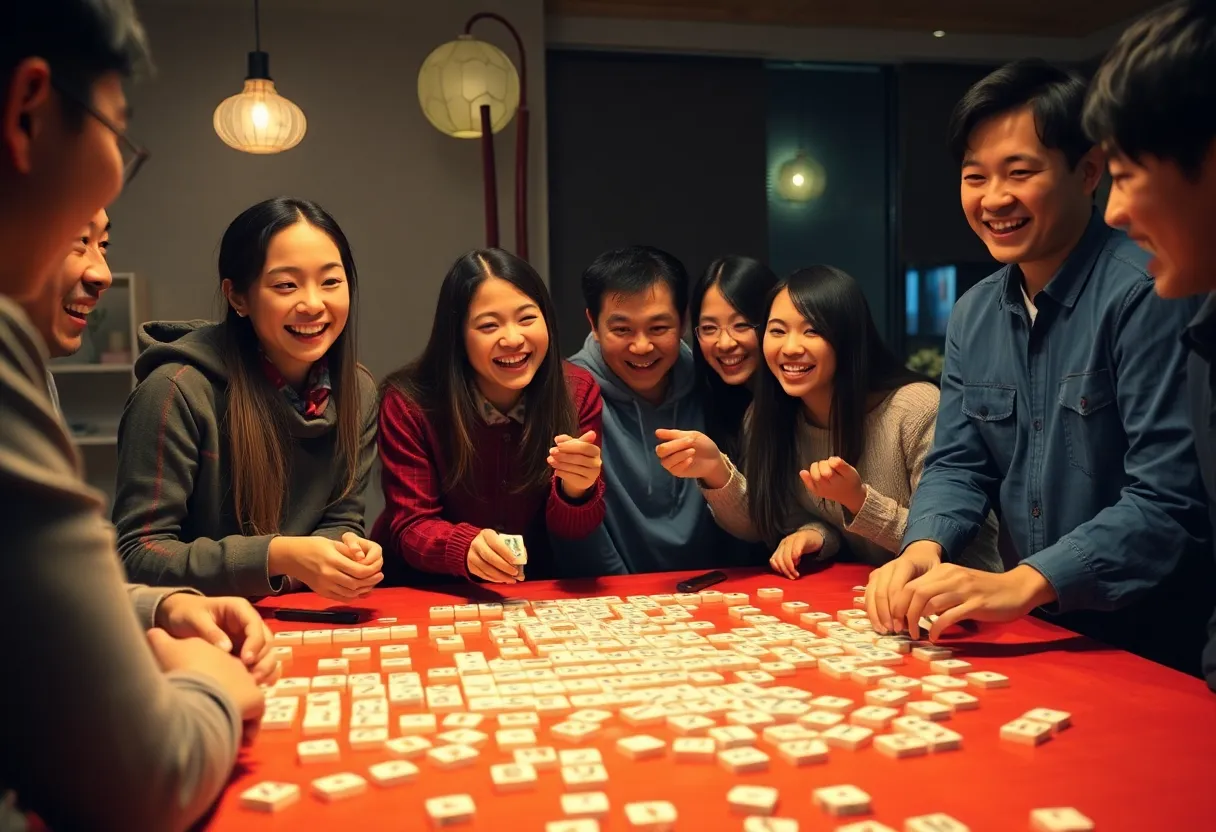
The ancient Chinese game of Mahjong is experiencing a significant resurgence across the United States, captivating a growing number of millennials and Generation Z. What was once predominantly associated with older generations is now becoming a popular pastime for younger adults seeking genuine social connections, mental stimulation, and a break from pervasive digital screens. This nationwide trend is evident in cities like Charlotte, North Carolina, where groups are enthusiastically embracing the tile-based game.
The renewed interest in Mahjong provides a refreshing contrast to an increasingly digital world. Enthusiasts are drawn to the game’s blend of skill, strategy, and luck, along with its inherent social nature. Playing Mahjong offers an opportunity for face-to-face interaction, fostering community and friendship in a relaxed environment. This appeal extends from casual gatherings to organized clubs and pop-up events that are appearing in various cities.
A Growing Nationwide Phenomenon
The expansion of Mahjong’s popularity among younger demographics is not isolated to specific regions; it is a noticeable trend nationwide. Eventbrite, a popular ticketing platform, reported a 179 percent increase in Mahjong events across the U.S. from 2023 to 2024. This growth highlights a broader interest in “grannycore” activities that prioritize offline engagement, such as baking workshops and needlework circles.
In Charlotte, North Carolina, millennials have developed a strong passion for Mahjong, valuing the relationships it helps build. Similarly, cities such as Los Angeles and New York are witnessing the formation of Mahjong clubs, some featuring contemporary elements like light shows and DJs. Luxury hotels in New York City have also started hosting Mahjong nights for guests, further indicating the game’s growing appeal beyond traditional settings. San Francisco has seen pop-up Mahjong parties in restaurants, drawing a diverse young crowd to festive atmospheres with custom cocktails and live DJs. Across Texas, in Austin, Dripping Springs, and Dallas, new social clubs dedicated to Mahjong are emerging, offering lessons and open play for all skill levels.
Reasons for Renewed Interest
Several factors contribute to Mahjong’s surging popularity among millennials and Gen Z. One primary reason is the desire for authentic social interaction. In an age dominated by online communication, the game offers a tangible way to connect with others, fostering camaraderie and shared experiences. The tactile experience of handling the 144 intricately designed tiles and the distinct sound they make during shuffling are also part of its sensory appeal.
The mental benefits of Mahjong are another significant draw. The game requires strategy, calculation, and attention, providing engaging mental exercise. For many, it serves as a welcome distraction from the constant influx of digital information, offering a structured environment to unplug and focus. This mental engagement can also help in maintaining cognitive function, particularly among older players, but the benefits extend to younger minds seeking a challenging and rewarding activity.
Furthermore, for some, particularly Asian Americans, playing Mahjong is a way to connect with their cultural heritage and experience a sense of cultural nostalgia. The game, with its rich history, transcends language barriers and creates a sense of shared tradition. The aesthetic qualities of the game, including the design of the tiles and the ritual of setting up, also make it appealing for sharing on social media platforms.
Understanding the Game
Mahjong is a tile-based game that originated in China in the mid-19th century, towards the end of the Qing Dynasty. Its name, which means “sparrow” in some southern Chinese dialects, refers to the clacking sound of the tiles. The game made its way to the United States in the 1920s, initially gaining popularity among Chinese immigrants and then among American players, notably through figures like Joseph Park Babcock. Over time, various versions of Mahjong have emerged, including Chinese, Japanese, and American styles, each with its own rules and play. The National Mah Jongg League, formed in 1937, played a crucial role in popularizing a streamlined American version, particularly among Jewish women.
Typically played by four players, the game involves a set of 144 tiles divided into categories such as Bamboos, Characters, Dots, Winds, Dragons, Flowers, and Seasons. Players start with 13 tiles and take turns drawing and discarding to form specific sets, with the goal of completing a winning hand. While online versions exist, the current trend emphasizes in-person play for its social benefits. Mahjong’s ability to evolve while retaining its core appeal ensures its continued relevance as a beloved pastime for a new generation.
Frequently Asked Questions (FAQ)
- What is Mahjong?
- Mahjong is a tile-based game that originated in China in the mid-19th century. It is a game of skill, strategy, and luck, typically played by four players with a set of 144 tiles based on Chinese characters and symbols.
- Why are younger generations embracing Mahjong nationwide?
- Younger generations are embracing Mahjong nationwide for social connection, mental stimulation, and as a refreshing break from digital screens. It also provides a way to connect with cultural heritage for some, and its aesthetic appeal is popular on social media.
- Where is the Mahjong trend visible in the U.S.?
- The Mahjong trend is visible nationwide across the U.S., with specific mentions in Charlotte, North Carolina, Los Angeles, New York City, San Francisco, Austin, Dripping Springs, Dallas, Greenville, Boynton Beach, Tulsa, Brooklyn, and Alexandria.
- What is the historical background of Mahjong?
- Mahjong originated in China in the mid-19th century and was introduced to the U.S. in the 1920s. It gained popularity among Chinese immigrants and American players, with the National Mah Jongg League forming in 1937 to popularize an American version.
- What are some key features of Mahjong play?
- Key features include being a tile-based game typically played by four players, involving skill, strategy, and luck. Players draw and discard 13 tiles to form specific sets and complete a winning hand. There are various regional variations of the game.
- How much has Mahjong event participation increased recently?
- There was a 179 percent increase in Mahjong events in the U.S. from 2023 to 2024, according to Eventbrite.
Key Features of Mahjong’s Resurgence
| Feature | Description | Scope |
|---|---|---|
| Target Audience | Millennials and Gen Z | Nationwide |
| Primary Appeal | Social connection, mental stimulation, break from digital technology | Nationwide |
| Growth in Events | 179% increase in events from 2023 to 2024 | Nationwide |
| Game Origin | 19th-century China | Global |
| Introduction to U.S. | 1920s | Nationwide |
| Game Components | Tile-based, 144 tiles, skill, strategy, luck | Global |
| Notable Locations | Charlotte (North Carolina), Los Angeles, New York City, San Francisco, Austin (Texas), Dallas (Texas) | State-level / Local |
Deeper Dive: News & Info About This Topic
HERE Resources
Charlotte Weekend Sports and Festivals Lineup

Author: HERE Charlotte
The CHARLOTTE STAFF WRITER represents the experienced team at HERECharlotte.com, your go-to source for actionable local news and information in Charlotte, Mecklenburg County, and beyond. Specializing in "news you can use," we cover essential topics like product reviews for personal and business needs, local business directories, politics, real estate trends, neighborhood insights, and state news affecting the area—with deep expertise drawn from years of dedicated reporting and strong community input, including local press releases and business updates. We deliver top reporting on high-value events such as Lovin' Life Music Festival, Charlotte Pride festival, and major sporting tournaments at Bank of America Stadium. Our coverage extends to key organizations like the Charlotte Regional Business Alliance and Foundation for the Carolinas, plus leading businesses in finance and entertainment that power the local economy such as Bank of America and NASCAR. As part of the broader HERE network, including HEREAsheville.com, HEREGreensboro.com, HERERaleigh.com, and HEREOBX.com, we provide comprehensive, credible insights into North Carolina's dynamic landscape.