

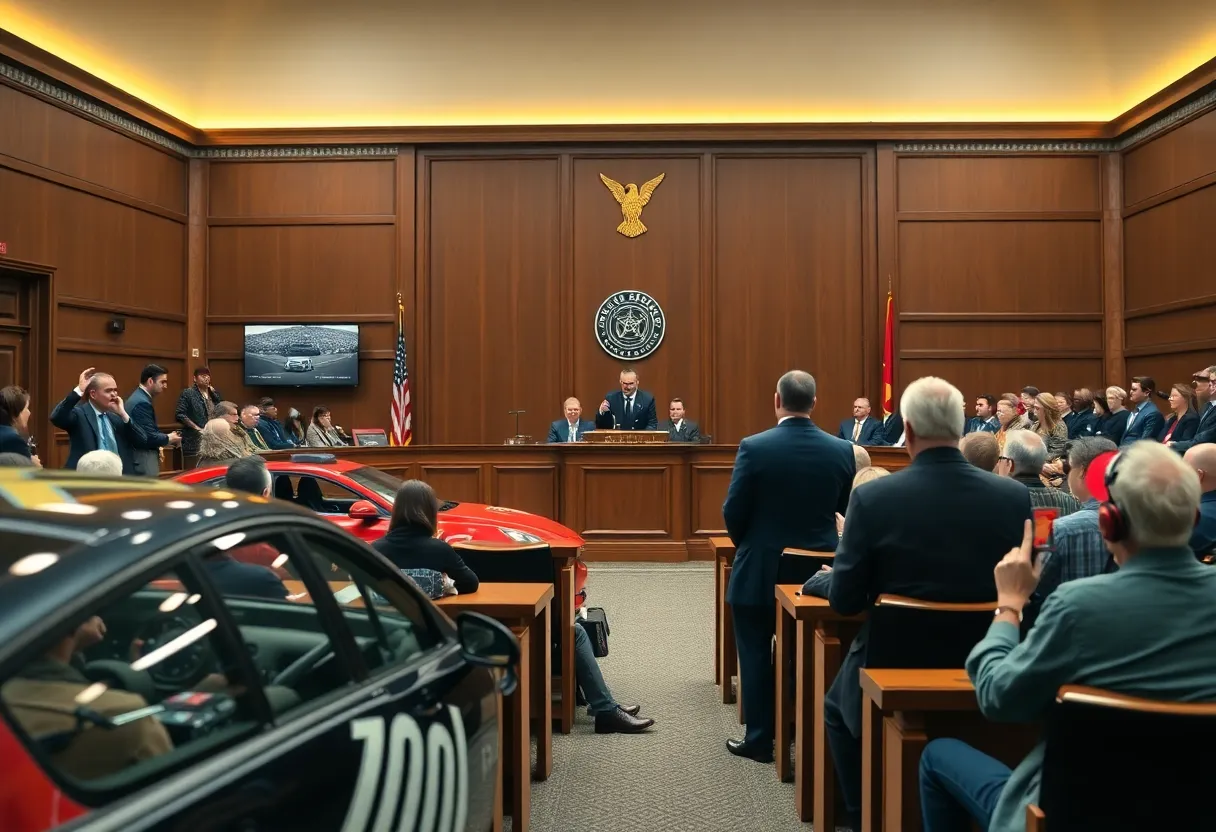
Charlotte, North Carolina, December 9, 2025
The ongoing antitrust trial against NASCAR in Charlotte raises critical questions about competition and fairness within the racing community. Economist Edward Snyder has testified that NASCAR owes $364.7 million to 23XI Racing and Front Row Motorsports due to monopolistic practices. This trial could reframe NASCAR’s governance and revenue-sharing structures, impacting local teams and the broader industry. The controversial 2025 charter agreement’s rushed nature has also come under scrutiny. As the case unfolds, it highlights the need for regulatory oversight while promoting an equitable competitive environment.
NASCAR Antitrust Trial: Implications for Charlotte’s Racing Community
The trial may reshape NASCAR’s governance and revenue-sharing practices
Charlotte, North Carolina
The ongoing antitrust trial involving NASCAR has captured the attention of racing enthusiasts and community members alike. Economist Edward Snyder, a former Department of Justice antitrust economist, testified that NASCAR owes $364.7 million in damages to 23XI Racing and Front Row Motorsports due to alleged monopolistic practices. As the trial unfolds in Charlotte, it opens a dialogue about competition, fairness, and the long-term sustainability of the racing industry in the region.
At the heart of Snyder’s testimony is the claim that NASCAR’s control over tracks, teams, and cars, along with exclusivity agreements with racetracks, has stifled the emergence of rival racing series. Such monopolistic tendencies can have significant implications for both local teams and the broader racing community. This trial highlights the need for regulatory oversight in sports leagues while emphasizing how local leadership and community initiatives can thrive in an environment with less bureaucracy.
Mired in Controversy: The Allegations Against NASCAR
The crux of the case lies in allegations that NASCAR operates as a monopoly, inhibiting competition and innovation within the racing arena. Snyder criticized NASCAR’s revenue-sharing model, asserting that teams currently receive only 25% of total revenue—significantly lower than competing leagues like Formula 1, where teams receive approximately 45%. Snyder estimates that NASCAR has underpaid teams by a staggering $1.06 billion from 2021 to 2024 based on lost revenues.
The Defense: NASCAR’s Position
NASCAR strongly disputes Snyder’s assessment, arguing that his comparisons with Formula 1 are misplaced and that expert analyses from their own team will provide an alternative perspective. As the trial progresses, the defense aims to challenge Snyder’s calculations and the validity of the claims presented by the plaintiffs.
Trial Progress and Impact on Local Teams
The trial is currently presided over by Judge Kenneth Bell, who has faced challenges due to delays, warranting the extension of court hours to keep proceedings on track. Given the complexities of the case, the outcome could bring structural changes not only to NASCAR’s governance but also its revenue-sharing practices. The implications of this trial could serve as a catalyst for reforms that promote a fairer competitive landscape in Charlotte’s motorsports community.
The Controversial 2025 Charter Agreement
A contentious aspect of this legal battle is the 2025 charter agreement presented to teams with limited time for review and negotiation. Criticism has been widespread regarding the fact that teams received a substantial 112-page document with a same-day deadline to sign. The rushed nature of the contract has raised concerns about transparency, fairness, and the decision-making process within NASCAR.
What Lies Ahead: Possible Outcomes of the Trial
The potential outcomes of this trial are significant. A ruling in favor of 23XI Racing and Front Row Motorsports could not only grant financial compensation but also drive NASCAR to reevaluate its operational practices and governance structure. It could serve as a turning point for teams seeking more equitable revenue-sharing agreements, ensuring that local racing organizations can thrive without being overshadowed by bureaucratic obstacles.
Conclusion
The ongoing antitrust trial against NASCAR is a pivotal moment for Charlotte’s racing community. It delves into critical questions about fairness, competition, and the future of local racing teams. As the trial progresses, it is crucial for community members and racing enthusiasts to remain engaged and informed. By supporting local initiatives and advocating for fair practices, the community can help shape a promising future for motorsports in Charlotte, North Carolina.
Frequently Asked Questions (FAQ)
What is the current status of the NASCAR antitrust trial?
The trial is ongoing, with economist Edward Snyder testifying that NASCAR owes $364.7 million in damages to 23XI Racing and Front Row Motorsports due to alleged monopolistic practices. NASCAR disputes this assessment and plans to present its own experts. The trial has experienced delays, prompting Judge Kenneth Bell to extend court hours to avoid extending the trial into a third week. The legal battle centers on a controversial 2025 charter agreement presented to teams with limited time for review or negotiation.
What are the potential implications of this trial for NASCAR?
The outcome of this trial could have significant implications for NASCAR’s governance and revenue-sharing practices, potentially leading to structural changes within the organization.
Who is Edward Snyder, and what is his role in this case?
Edward Snyder is a former Department of Justice antitrust economist who testified in the federal antitrust trial, arguing that NASCAR’s control over tracks, teams, and cars, along with exclusivity agreements with racetracks, has prevented rival racing series from emerging. He criticized NASCAR’s revenue-sharing model and calculated that NASCAR underpaid teams by $1.06 billion from 2021 to 2024.
What is the 2025 charter agreement, and why is it controversial?
The 2025 charter agreement is a contract presented to NASCAR teams with limited time for review or negotiation. The agreement is controversial because it was presented to teams with a same-day deadline to sign the 112-page document, after more than two years of negotiations between NASCAR and its teams. Teams that refused to sign the new charter agreement, such as 23XI Racing and Front Row Motorsports, filed the antitrust lawsuit against NASCAR.
What are the key points of contention in the NASCAR antitrust case?
The key points of contention in the NASCAR antitrust case include allegations that NASCAR operates as a monopoly, controls tracks, teams, and cars, and uses exclusivity agreements to prevent rival racing series from emerging. Additionally, the revenue-sharing model, which provides only 25% to teams compared to Formula 1’s estimated 45%, is under scrutiny. Teams claim that NASCAR’s practices have led to significant underpayment over the years.
What could be the potential outcomes of this trial?
The potential outcomes of this trial include significant implications for NASCAR’s governance and revenue-sharing practices, potentially leading to structural changes within the organization. A ruling in favor of the plaintiffs could result in financial compensation and a reevaluation of NASCAR’s operational practices.
Key Features of the NASCAR Antitrust Case
| Feature | Description |
|---|---|
| Parties Involved | 23XI Racing, Front Row Motorsports, and NASCAR |
| Allegations | Monopolistic practices, control over tracks, teams, and cars, and exclusivity agreements preventing rival racing series |
| Revenue-Sharing Model | Teams receive 25% of revenue, compared to Formula 1’s 45% |
| Damages Claimed | $364.7 million owed to 23XI Racing and Front Row Motorsports; $1.06 billion underpaid to 36 chartered teams from 2021 to 2024 |
| Trial Status | Ongoing, with delays prompting extended court hours; outcome could lead to structural changes within NASCAR |
Deeper Dive: News & Info About This Topic
HERE Resources
NASCAR Trial in Jacksonville: What You Need to Know
Charlotte’s Blue Line Incident Raises Safety Concerns
Michael Jordan Critiques NASCAR’s Charter System in Antitrust Trial
North Carolina Sees Record Job Growth
NASCAR Faces Legal Hurdles Over Antitrust Allegations
NASCAR Antitrust Trial Examines Revenue-Sharing Dispute
NASCAR Antitrust Case Questions Charter Agreements
Zara Opens Its First Store in Charlotte at SouthPark Mall
Support for Businesses Affected by Border Patrol Surge in Charlotte
North Carolina Sets Record for Job Creation and Investment

Author: HERE Charlotte
The CHARLOTTE STAFF WRITER represents the experienced team at HERECharlotte.com, your go-to source for actionable local news and information in Charlotte, Mecklenburg County, and beyond. Specializing in "news you can use," we cover essential topics like product reviews for personal and business needs, local business directories, politics, real estate trends, neighborhood insights, and state news affecting the area—with deep expertise drawn from years of dedicated reporting and strong community input, including local press releases and business updates. We deliver top reporting on high-value events such as Lovin' Life Music Festival, Charlotte Pride festival, and major sporting tournaments at Bank of America Stadium. Our coverage extends to key organizations like the Charlotte Regional Business Alliance and Foundation for the Carolinas, plus leading businesses in finance and entertainment that power the local economy such as Bank of America and NASCAR. As part of the broader HERE network, including HEREAsheville.com, HEREGreensboro.com, HERERaleigh.com, and HEREOBX.com, we provide comprehensive, credible insights into North Carolina's dynamic landscape.