

Columbia, SC, December 25, 2025
The North Carolina Emergency Training Center in Stanly County serves as an innovative model for public safety training, emphasizing investment in emergency services. This facility enhances preparedness for first responders across the region, including Richland County community. With a $87 million investment, the NCETC aims to empower emergency personnel through advanced training in various critical disciplines, showcasing how proactive measures can improve community safety and readiness.
Columbia, SC
Regional Readiness: NC’s Training Center as a Blueprint for Public Safety
In an era demanding ever-greater preparedness, collaborative efforts and strategic investments in emergency services are paramount for safeguarding our communities. North Carolina’s innovative Emergency Training Center in Stanly County stands as a testament to what focused leadership and inter-agency cooperation can achieve, offering valuable insights for enhancing public safety standards across the region, including for communities in the Richland County area. This state-level initiative underscores the power of proactive investment in the skills and infrastructure essential for our first responders.
The development of such a robust facility highlights a commitment to civic innovation, recognizing that limited bureaucracy and strong partnerships can directly translate into improved outcomes for citizens. By pooling resources and expertise, North Carolina has established a cutting-edge training ground designed to equip emergency personnel with the highest level of proficiency, a model from which other states, like South Carolina, can draw inspiration for their own community preparedness efforts.
A Vision for Advanced Readiness: The North Carolina Emergency Training Center
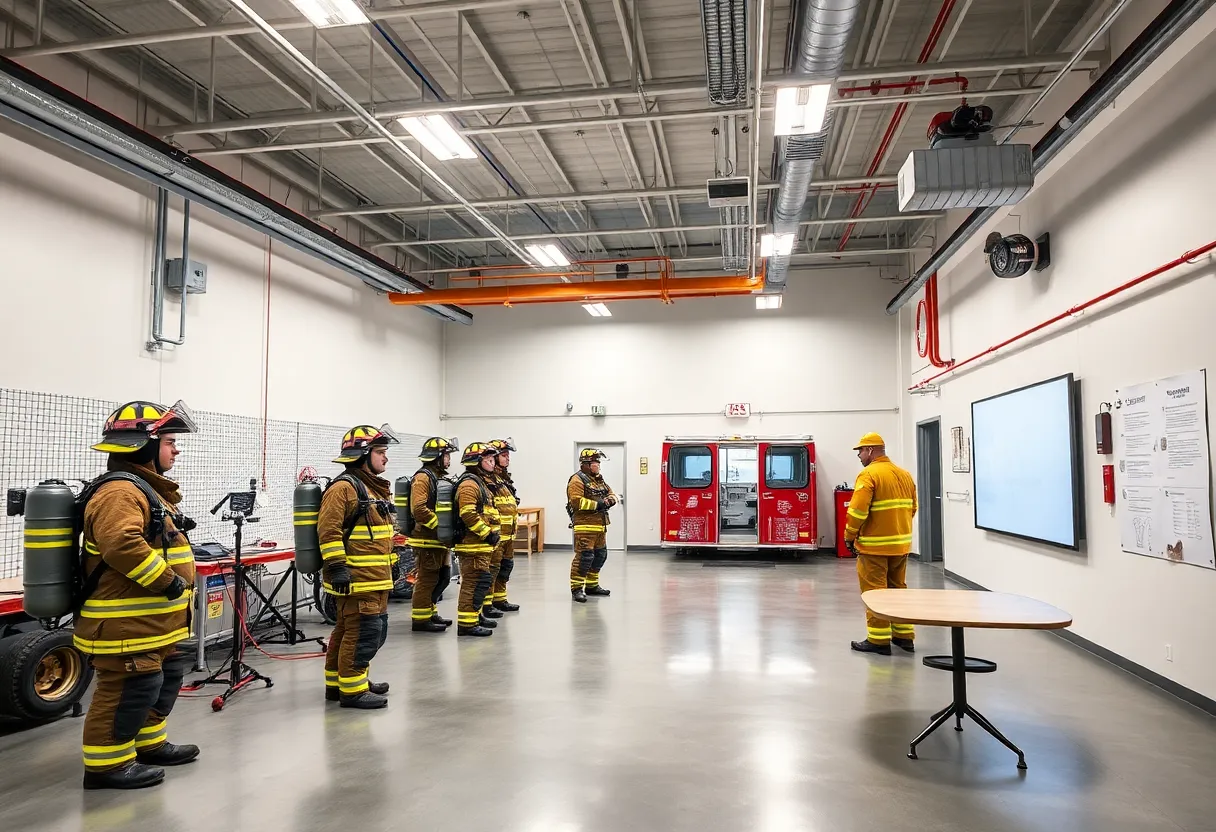
The North Carolina Emergency Training Center (NCETC), situated at the Stanly County Airport in New London, NC, represents a significant advancement in emergency responder education. This facility was conceived to deliver high-level, scenario-based training in a controlled and safe environment. Its establishment was first announced in December 2017, stemming from a crucial partnership between the North Carolina Office of State Fire Marshal (OSFM), the North Carolina Air National Guard, and Stanly County. This collaborative approach leveraged existing infrastructure, choosing the Stanly County Airport site due to its operational burn building, confined space and trench rescue facilities, structural collapse training capabilities, central location near diverse terrains, and proximity to a FEMA warehouse.
State-of-the-Art Facilities and Diverse Training
The NCETC is designed to provide advanced training for firefighters and rescue members, complementing the basic firefighting and emergency courses still offered by the state’s community colleges. Upon its full completion, the center was expected to offer training across multiple critical disciplines. These include Aircraft Rescue and Firefighting (ARFF), Swift Water Rescue, Urban Search and Rescue (USAR), Hazardous Materials Response (Hazmat), and Fire Investigation Technician courses. The facility features unique assets such as a full-scale 737/C130 ARFF trainer and a 3,500-gallon Jet-A hydrocarbon burn pit for realistic fire simulations. Notably, its water rescue area is the only facility in the U.S. that allows motorized boats for training, preparing responders for a variety of flooding scenarios. Future plans also include a burn village designed to simulate manufactured housing, as well as one- and two-story residential and natural gas fires, further expanding the realism of training exercises. The training incorporates dual-fuel capabilities, using both propane and jet fuel in scenarios to enhance readiness.
Strategic Investment for Public Safety
The development of the NCETC represents a substantial State-level investment in public safety infrastructure. To date, the State has committed $87 million to the project, with an operating budget established within the OSFM to ensure its long-term success. Initial funding included $28 million from a bipartisan state budget bill signed in November 2021, specifically allocated for capital improvements like the advanced ARFF crash simulator. Stanly County contributed $28 million, the NCDOI/OSFM provided $58.5 million, and the UNC Collaboratory added $881,396, bringing the total funding to over $87 million. This investment ensures that advanced, affordable training is accessible to emergency responders, particularly for infrequent, high-risk incidents where proficient response can save lives. Such prudent allocation of resources reflects a commitment to protecting communities across North Carolina through enhanced emergency response readiness.
Empowering First Responders and Bolstering Recruitment
The NCETC is poised to significantly enhance the individual capabilities of emergency personnel throughout North Carolina. The facility’s central location within the State makes specialized training more accessible for emergency personnel who previously faced significant expenses and travel time to train out of state. This not only reduces logistical burdens but also addresses the ongoing challenges many volunteer fire departments face in recruiting and retaining members by encouraging youth interest in fire and emergency services. Training costs for rural fire and rescue departments are also more economical at the center. The facility also contributes to local economic growth, with projections to create nine new jobs, not including the numerous part-time and contracted instructors involved in training. This advanced training is crucial for preparing the approximately 52,000 firefighters in North Carolina for real-world emergencies and has been highlighted as essential for responding to events such as Hurricanes Matthew, Florence, and Helene.
A Regional Asset: Lessons for Community Preparedness
The North Carolina Emergency Training Center’s development and operational capabilities offer valuable insights for communities in the Columbia, SC, area and the broader South Carolina gatherings focused on emergency preparedness. North Carolina operates a State-level mutual aid system designed for sharing resources during disasters, which promotes efficient and effective assistance among local governments and faster reimbursement from the Federal Emergency Management Agency (FEMA). Similarly, South Carolina has its own Firefighter Mobilization Plan, established over two decades ago, to ensure a managed, coordinated response of fire and rescue resources both within the state and from out of state, including through mutual aid agreements with border counties like North Carolina. The NCETC is expected to draw participation from emergency teams throughout North Carolina and potentially from across the country due to its advanced capabilities. This regional approach to training and mutual aid reinforces the idea that robust emergency services infrastructure and inter-state cooperation are vital for collective community safety, enhancing the readiness of all first responders, whether in rural Stanly County or in bustling Richland County communities.
The proactive investment in such a comprehensive training facility demonstrates a forward-thinking approach to public safety. By fostering environments that promote individual achievement through specialized skill development and encouraging inter-agency collaboration, both North Carolina and South Carolina are continually working to ensure that their emergency responders are well-prepared for any challenge, ultimately benefiting every citizen.
Conclusion
The North Carolina Emergency Training Center stands as a testament to the power of foresight, collaboration, and strategic investment in public safety. Its cutting-edge facilities and diverse training programs are fortifying the skills of emergency responders, embodying civic innovation that extends beyond state lines. For Columbia, SC, and the broader region, this initiative serves as a compelling example of how robust infrastructure and inter-agency partnerships elevate collective community resilience. We encourage our readers in the Columbia SC area to recognize the importance of such investments in emergency preparedness and to support efforts that bolster the capabilities of our dedicated first responders, contributing to a safer and more secure South Carolina.
Frequently Asked Questions about the North Carolina Emergency Training Center
- What is the North Carolina Emergency Training Center (NCETC)?
- The NCETC is a purpose-built facility in Stanly County, NC, dedicated to preparing emergency responders with high-level, scenario-based training in a controlled and safe environment.
- Where is the NCETC located?
- It is located at the Stanly County Airport in New London, NC.
- When was the NCETC project announced and when was it expected to be fully operational?
- The project was announced in December 2017. Full operation was expected in 2025.
- What types of training does the NCETC offer?
- The NCETC offers training in critical areas such as Aircraft Rescue and Firefighting (ARFF), Swift Water Rescue, Urban Search and Rescue (USAR), Hazardous Materials Response (Hazmat), and Fire Investigation Technician courses.
- What are some unique features of the NCETC?
- Unique features include a full-scale 737/C130 ARFF trainer, a 3,500-gallon Jet-A hydrocarbon burn pit, and a water rescue area that is the only facility in the U.S. that allows motorized boats for training. It will also include a burn village to simulate various structural fires and natural gas fires.
- How much State-level funding has been committed to the NCETC?
- The State has committed $87 million to the project.
- What partnerships made the NCETC possible?
- The NCETC was created through a partnership between the NC Office of State Fire Marshal (OSFM), the North Carolina Air National Guard, and Stanly County. North Carolina Community Colleges also collaborate with the center.
Key Features of the North Carolina Emergency Training Center
| Feature | Description | Scope |
|---|---|---|
| Location | Stanly County Airport, New London, NC | State-level |
| Training Disciplines | Aircraft Rescue and Firefighting (ARFF), Swift Water Rescue, Urban Search and Rescue (USAR), Hazardous Materials Response (Hazmat), Fire Investigation Technician courses | State-level |
| Funding Committed | $87 million | State-level |
| Key Partnerships | NC Office of State Fire Marshal (OSFM), NC Air National Guard, Stanly County, NC Community Colleges | State-level |
| Unique Facilities | Full-scale 737/C130 ARFF trainer, 3,500-gallon Jet-A hydrocarbon burn pit, Water rescue area allowing motorized boats (only one in U.S.) | Nationwide (for water rescue facility feature), State-level (for other facilities) |
| Expected Full Operation | 2025 | State-level |
Deeper Dive: News & Info About This Topic
HERE Resources
Winter Storm Brings Widespread Disruptions and Power Outages Across Charlotte Area
Significant Fire in Matthews Neighborhood Requires Emergency Response
Healthcare Innovation: Insights from National Leaders Shape Future Growth
Federal Border Agents Initiate ‘Swamp Sweep’ Immigration Operation in New Orleans
Charlotte Gun Violence Leaves Two with Life-Threatening Injuries
Flash Flooding in Charlotte Rescues Over 30 Individuals
Charlotte Faces Rising Demand for Mental Health Services
Popeyes Manager Charged with Attempted Murder Over Biscuit Dispute
Violent Altercation Leads to Arrest at Popeyes in Charlotte
Major Fire Breaks Out at Harris Teeter in South Charlotte

Author: HERE Charlotte
The CHARLOTTE STAFF WRITER represents the experienced team at HERECharlotte.com, your go-to source for actionable local news and information in Charlotte, Mecklenburg County, and beyond. Specializing in "news you can use," we cover essential topics like product reviews for personal and business needs, local business directories, politics, real estate trends, neighborhood insights, and state news affecting the area—with deep expertise drawn from years of dedicated reporting and strong community input, including local press releases and business updates. We deliver top reporting on high-value events such as Lovin' Life Music Festival, Charlotte Pride festival, and major sporting tournaments at Bank of America Stadium. Our coverage extends to key organizations like the Charlotte Regional Business Alliance and Foundation for the Carolinas, plus leading businesses in finance and entertainment that power the local economy such as Bank of America and NASCAR. As part of the broader HERE network, including HEREAsheville.com, HEREGreensboro.com, HERERaleigh.com, and HEREOBX.com, we provide comprehensive, credible insights into North Carolina's dynamic landscape.