
Charlotte, NC, February 12, 2026
Western North Carolina’s forests are set to recover with a significant federal allocation of $290 million following the devastating impact of Hurricane Helene. The funding will support a collaborative recovery effort led by federal and state partners, focusing on restoring natural landscapes and enhancing resilience against future challenges. Extensive damage was reported across the Pisgah and Nantahala National Forests, necessitating immediate action to repair infrastructure and address the ecological fallout. Community engagement and local expertise will play a vital role in this decade-long recovery initiative.
Charlotte, NC
North Carolina Forests Forge Ahead with $290 Million Recovery After Helene’s Impact
Western North Carolina’s majestic forests, critical for both recreation and local economies, are embarking on a significant journey of recovery following the extensive damage inflicted by Hurricane Helene. A substantial federal allocation of $290 million has been committed to bolster these vital efforts, underscoring a collaborative spirit aimed at restoring cherished natural landscapes and the communities that depend on them.
This initiative represents a strategic partnership between federal and state entities, designed to efficiently address the widespread devastation and foster long-term resilience. The approach emphasizes streamlined action and the leveraging of local expertise, reflecting a commitment to effective governance and community-centered solutions in the face of immense natural challenges.
Hurricane Helene’s Profound Impact on Western North Carolina
Hurricane Helene made landfall in Florida on September 26, 2024, as a Category 4 hurricane, subsequently moving inland to impact the southeastern United States. Western North Carolina experienced severe consequences, primarily on September 27, 2024, as the hurricane transitioned into a tropical storm. The storm delivered record-breaking rainfall, which triggered widespread flooding, high winds, and thousands of landslides and mudflows across the mountainous regions.
The devastation extended across various Western North Carolina counties, including Avery, Buncombe, McDowell, Mitchell, Henderson, and Yancey. Numerous towns such as Asheville, Swannanoa, Black Mountain, Montreat, Spruce Pine, Fairview, Chimney Rock, and Lake Lure also faced significant disruption. Hurricane Helene became the costliest natural disaster in North Carolina’s history, with damages exceeding $59.6 billion, and tragically resulted in at least 108 reported deaths statewide.
Extensive Damage to National Forests
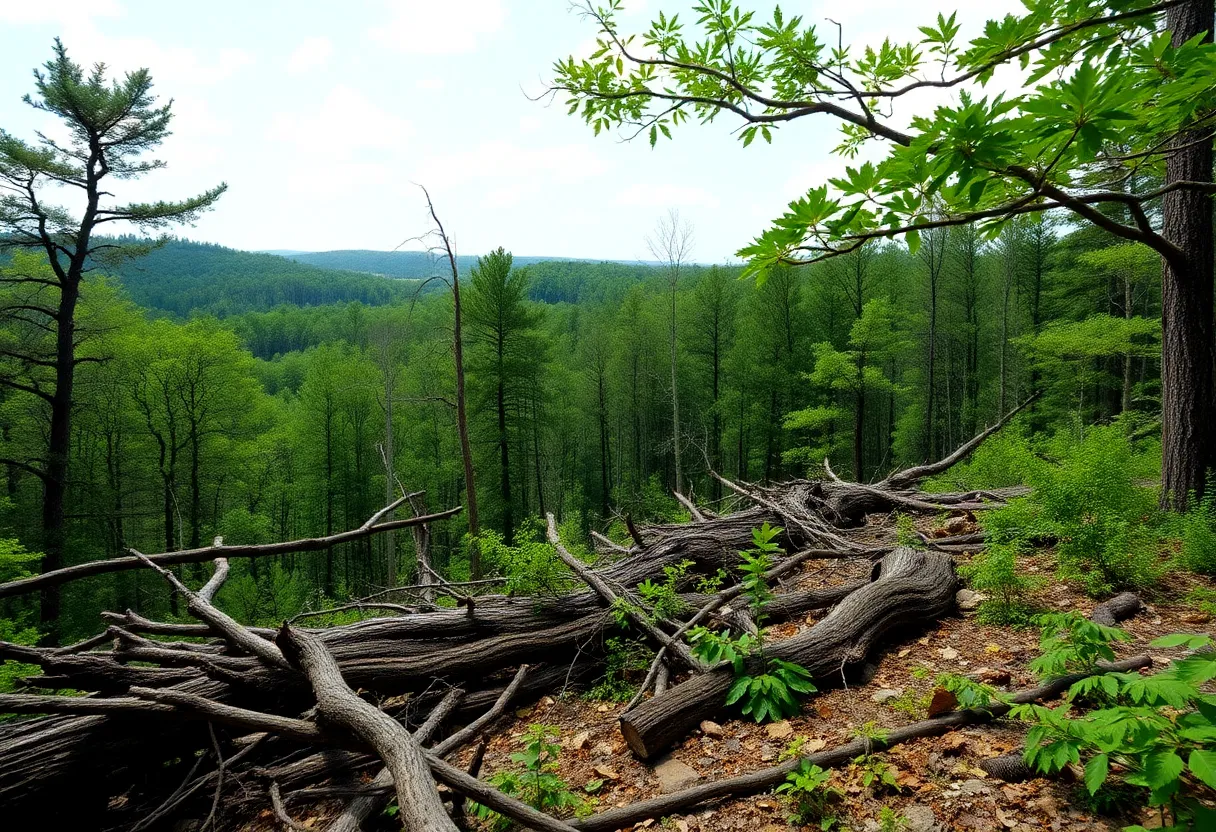
The Pisgah and Nantahala National Forests bore the brunt of Helene’s fury. Assessments revealed moderate to catastrophic damage across more than 187,000 acres, which accounts for approximately 20 percent of their total acreage, including 117,000 acres of vegetation loss. The storm caused extensive destruction of tens of thousands of acres of timber, widespread damage to roads and essential infrastructure, and significant harm to wildlife habitats.
Furthermore, nearly 900 miles of Forest Service-managed roads and an estimated 800 miles of trails were damaged or rendered impassable. The sheer volume of downed trees and devastated vegetation left an unprecedented level of fuel, considerably increasing the risk of future wildfires. Across Western North Carolina, over 800,000 acres of forestlands, encompassing both public and private properties, were affected by the hurricane.
A Coordinated Response: The Good Neighbor Agreement
In response to this immense challenge, the U.S. Department of Agriculture’s Forest Service and the North Carolina Wildlife Resources Commission have established a significant “Good Neighbor Agreement” worth $290 million. This agreement represents the largest of its kind in the Forest Service’s history, signaling a robust commitment to the recovery of Western North Carolina’s natural resources.
The Good Neighbor Authority, initially approved by Congress in 2001 and expanded in the 2018 Farm Bill, serves as a vital tool for federal agencies to collaborate with non-federal partners on forest management. This cooperative framework is designed to accelerate recovery efforts, foster the creation of new jobs, reduce overall costs, and ultimately strengthen the communities impacted by the hurricane. By empowering the state-level Wildlife Resources Commission to take a leading role, the agreement aims to harness local expertise and potentially bypass some of the bureaucratic hurdles that can sometimes impede federal land management.
Comprehensive Recovery Efforts Underway
Under the terms of this 10-year agreement, the North Carolina Wildlife Resources Commission is authorized to lead extensive recovery efforts across the affected national forests. Key actions include the systematic removal of storm debris and dangerous downed timber. This essential step mitigates the immediate hazards and reduces the elevated risk of wildfires.
Significant resources will be dedicated to repairing damaged roads, trails, and recreation areas, ensuring public access to these cherished natural spaces. Efforts also encompass managing invasive species, which often thrive in disturbed environments, to protect native ecosystems and promote healthy regrowth. Furthermore, critical work will focus on restoring damaged watersheds and improving wildlife habitats, which are crucial for the long-term ecological health of the region. This integrated approach aims not only to rebuild but also to enhance the resilience of the forests against future disturbances.
Community Engagement and Long-Term Vision
The resilience of North Carolina’s natural landscapes is matched by the enduring spirit of its communities. While federal and state agencies lead the major recovery, local organizations and citizens play a vital role. Groups such as FIND Outdoors and EcoForesters have demonstrated commendable personal initiative through volunteer projects, offering support to landowners, and assisting with debris removal. These grassroots efforts exemplify how individual achievement and local involvement are integral to comprehensive recovery.
The long-term vision extends beyond immediate repairs, focusing on creating more diverse and robust forest ecosystems. Experts acknowledge that while forests are inherently resilient and will eventually recover, strategic assistance and active management are crucial to guide this process. This proactive stewardship ensures that the rebuilt forests can better withstand future challenges, preserving their ecological and economic benefits for generations to come. This period of rebuilding presents an opportunity for civic innovation, encouraging efficient coordination and partnerships that serve the collective good of the community and its natural heritage.
Conclusion: A Path Forward for North Carolina’s Natural Treasures
The $290 million federal investment in the recovery of North Carolina’s forests following Hurricane Helene represents a significant commitment to healing and rebuilding. Through the innovative Good Neighbor Agreement, federal and state agencies are collaborating to ensure that the Pisgah and Nantahala National Forests, and indeed all affected areas, receive the dedicated attention required for a robust restoration. This endeavor highlights the importance of coordinated action, efficient resource deployment, and local leadership in overcoming profound challenges.
As recovery efforts progress over the next decade, the ongoing involvement of communities, volunteers, and private partners will be instrumental. This collective initiative not only aims to restore the physical grandeur of North Carolina’s natural treasures but also to strengthen the bonds within its communities. Readers are encouraged to stay informed about these vital recovery efforts and consider avenues for supporting local conservation and community development initiatives in Western North Carolina.
Keywords: Charlotte NC, North Carolina forests, Hurricane Helene recovery, Pisgah National Forest, Nantahala National Forest, community resilience.
Frequently Asked Questions About Helene Recovery
- What was the cause of the widespread damage to North Carolina’s forests?
- The widespread damage to North Carolina’s forests was caused by Hurricane Helene, which transitioned into a tropical storm as it moved inland, causing widespread flooding, high winds, and triggering thousands of landslides and mudflows in Western North Carolina and other southeastern states.
- When did Hurricane Helene impact North Carolina?
- Hurricane Helene made landfall in Florida on September 26, 2024, as a Category 4 hurricane. It then moved inland, impacting Western North Carolina primarily on September 27, 2024. The heavy rainfall and landslides occurred between September 26 and 28, 2024.
- Which North Carolina forests were most affected by Hurricane Helene?
- The Pisgah and Nantahala National Forests in Western North Carolina were particularly hard hit by Hurricane Helene.
- How much funding has been allocated for the recovery of North Carolina’s forests?
- $290 million in federal funding has been allocated for Hurricane Helene recovery efforts in Western North Carolina.
- What types of recovery efforts are included in the plan?
- Recovery efforts include removing storm debris, repairing roads, trails, and recreation areas, managing invasive species, restoring damaged watersheds, and improving wildlife habitat.
- What is the ‘Good Neighbor Agreement’ for forest recovery?
- The ‘Good Neighbor Agreement’ is a partnership between the U.S. Forest Service and the North Carolina Wildlife Resources Commission, authorizing the state commission to lead comprehensive recovery work across the affected national forests over the next 10 years. This is the largest such agreement in Forest Service history.
Key Features of the Helene Recovery Plan in North Carolina
| Feature | Details | Geographic Scope |
|---|---|---|
| Event Type | Hurricane (Helene) causing widespread flooding, high winds, and thousands of landslides/mudflows. | State-level |
| Primary Impact Date | September 27, 2024 | State-level |
| Affected National Forests | Pisgah and Nantahala National Forests | State-level |
| Total Federal Funding | $290 million | State-level |
| Agreement Type | Good Neighbor Agreement (U.S. Forest Service & NC Wildlife Resources Commission) | State-level |
| Agreement Duration | 10 years | State-level |
| Key Recovery Activities | Storm debris removal, road/trail/recreation area repairs, invasive species management, watershed restoration, wildlife habitat improvement. | State-level |
| Damaged Forest Area | Over 187,000 acres in Pisgah and Nantahala National Forests (approx. 20% of total acreage); over 800,000 acres of forestlands statewide affected. | State-level |
| Infrastructure Damage | Nearly 900 miles of roads and 800 miles of trails damaged. | State-level |
| Increased Risk | Wildfires due to unprecedented fuel load from downed trees. | State-level |
Deeper Dive: News & Info About This Topic
HERE Resources
Charlotte’s Opportunity: National Triathlon Growth Ignites Local Spirit
North Carolina Revamps Mental Health Laws After Tragedy
Duke Energy’s 2025 Performance and Impact on Charlotte’s Economy
Catalyzing Hope: Charlotte’s Role in Statewide Burn Survivor Support
Charlotte Sees Rise in Gambling Addiction Calls After Betting Legalization
Hornets Extend Historic Winning Streak to Nine Games
Hornets Continue Winning Streak Ahead of Key Matchup
Flavorful Forecast: 5 New Mecklenburg Eateries Spark Economic Buzz
Monks’ Peace Walk to DC: A Journey of Faith and Community
Tragic Death of North Carolina Teen Due to Severe Weather

Author: HERE Charlotte
The CHARLOTTE STAFF WRITER represents the experienced team at HERECharlotte.com, your go-to source for actionable local news and information in Charlotte, Mecklenburg County, and beyond. Specializing in "news you can use," we cover essential topics like product reviews for personal and business needs, local business directories, politics, real estate trends, neighborhood insights, and state news affecting the area—with deep expertise drawn from years of dedicated reporting and strong community input, including local press releases and business updates. We deliver top reporting on high-value events such as Lovin' Life Music Festival, Charlotte Pride festival, and major sporting tournaments at Bank of America Stadium. Our coverage extends to key organizations like the Charlotte Regional Business Alliance and Foundation for the Carolinas, plus leading businesses in finance and entertainment that power the local economy such as Bank of America and NASCAR. As part of the broader HERE network, including HEREAsheville.com, HEREGreensboro.com, HERERaleigh.com, and HEREOBX.com, we provide comprehensive, credible insights into North Carolina's dynamic landscape.