

Raleigh, North Carolina, December 20, 2025
Raleigh, North Carolina is taking precautions after a confirmed case of measles in a traveler at Raleigh-Durham International Airport, urging vaccinations due to rising national cases. The North Carolina Department of Health reports no local cases this year but warns of exposure risks. As measles cases surge across the U.S., health officials emphasize the importance of vaccinations to prevent outbreaks and protect the community.
Raleigh Braces for Potential Measles Spread Following Airport Exposure
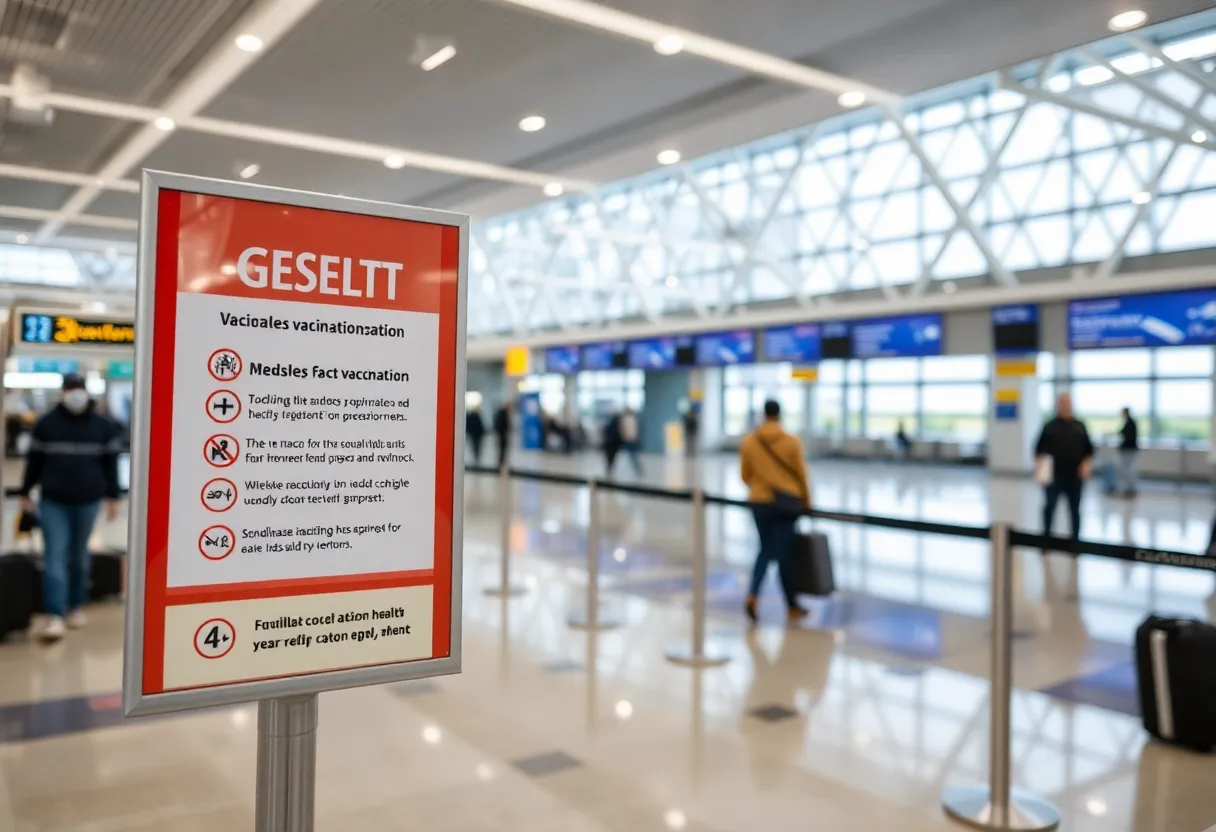
Raleigh, North Carolina is on alert after a confirmed measles case in a non-resident traveler was identified at Raleigh-Durham International Airport (RDU) on December 10, 2025. This incident has prompted local and state health officials to issue public health warnings and reinforce vaccination recommendations amidst a nationwide surge in measles cases, the highest in over three decades.
Airport Exposure Incident
The North Carolina Department of Health and Human Services (NCDHHS) and Wake County Public Health announced that an individual, who is a resident of another state, traveled through Terminal 2 of RDU during the early morning hours of December 10, 2025, while infectious with measles. Those present in Terminal 2 between 4:00 a.m. and 8:00 a.m. on that date may have been exposed to the highly contagious virus. Currently, North Carolina public health officials indicate there is no known health risk at Raleigh-Durham International Airport.
Public health officials are advising individuals who were at RDU Terminal 2 during the specified timeframe and are not immune to measles to contact their healthcare providers. Vaccination remains the best defense against measles.
North Carolina’s Preparedness Amid Rising National Cases
While no measles cases have been identified in North Carolina residents in 2025, apart from a confirmed case in June involving an international traveler, the state is actively preparing for potential outbreaks. North Carolina’s State Epidemiologist has expressed concerns about slipping vaccination coverage, increasing the risk of vaccine-preventable diseases. To bolster surveillance, North Carolina initiated wastewater monitoring for the measles virus in June 2025, now testing at 34 sites across the state weekly.
Nationwide Measles Surge Reaches Historic Levels
The exposure in North Carolina comes as the United States faces its most significant increase in measles cases in over 30 years. As of December 16, 2025, a staggering 1,958 confirmed measles cases have been reported across 44 jurisdictions nationwide. This figure represents the highest annual total since 1992, far exceeding typical numbers since the virus was declared eliminated in the U.S. in 2000. The Centers for Disease Control and Prevention (CDC) has reported 49 outbreaks in 2025, with a concerning 88% of confirmed cases linked to these outbreaks. Tragically, three confirmed deaths from measles have occurred in the U.S. in 2025.
The overwhelming majority—93%—of these confirmed cases are among individuals who are unvaccinated or whose vaccination status is unknown. This trend highlights the critical role of vaccination in preventing widespread transmission.
Regional Outbreaks and Risk of Spread
Adding to North Carolina’s concerns is a significant and ongoing measles outbreak in neighboring South Carolina. As of December 16, 2025, South Carolina has reported 138 cases, with 135 concentrated in Spartanburg County. Health officials in Charlotte, North Carolina, have explicitly warned that this growing outbreak could extend into Mecklenburg County, emphasizing that highly contagious diseases like measles do not respect geographical boundaries. Other states, including Arizona, Utah, and New York, have also reported recent increases in their measles case counts.
Experts are increasingly concerned that the continuous circulation of measles, particularly linked to major outbreaks that have persisted for months, could jeopardize the U.S.’s measles elimination status by January 2026. The loss of this status would signify that measles is no longer merely imported but is experiencing sustained domestic transmission.
Understanding Measles: The Disease and Its Prevention
Measles, also known as rubeola, is a highly contagious respiratory disease caused by a virus. It spreads easily through the air when an infected person coughs, sneezes, or even breathes. The measles virus can remain active and contagious in the air or on infected surfaces for up to two hours after an infected person has left a room.
Symptoms and Contagious Period
Initial symptoms of measles typically appear 10 to 14 days after exposure and often resemble a flu-like illness. These can include a high fever (potentially exceeding 104°F), cough, runny nose, and red, watery eyes (conjunctivitis). Two to three days into the illness, small white spots with red centers, known as Koplik spots, may appear inside the mouth. A characteristic red, blotchy rash typically emerges three to five days after the initial symptoms, usually starting on the face and spreading downwards to the rest of the body.
An infected person can spread measles to others from four days before the rash appears through four days after its appearance, meaning transmission can occur before an individual even knows they have the disease.
Potential Complications
Measles can lead to serious complications, especially in vulnerable populations such as babies, young children, pregnant individuals, and those with compromised immune systems. Common complications include ear infections, diarrhea, and pneumonia. More severe complications, though rare, can involve brain inflammation (encephalitis), which may lead to brain damage, blindness, or even death. Approximately 11% of measles cases in the U.S. in 2025 resulted in hospitalization.
Prevention Through Vaccination
The most effective way to prevent measles is through vaccination with the Measles, Mumps, Rubella (MMR) vaccine. Two doses of the MMR vaccine are recommended for full protection: the first dose typically administered between 12 and 15 months of age, and the second dose between 4 and 6 years of age, before school entry. Two doses are approximately 97% effective at preventing measles, while one dose is about 93% effective.
For infants aged 6 through 11 months who are traveling internationally or to areas experiencing measles outbreaks, one dose of the MMR vaccine is recommended. It is important to note that these infants will still require two additional doses according to the routine childhood schedule.
There is no specific cure for measles; medical care focuses on supportive treatment and managing complications. Vitamin A supplements may be administered under medical supervision to reduce the risk of severe complications, but they do not cure or prevent the disease. Ensuring high vaccination rates in communities is crucial for achieving herd immunity, which protects vulnerable individuals who cannot be vaccinated.
Frequently Asked Questions (FAQ)
- What is measles?
- Measles, also known as rubeola, is a highly contagious respiratory disease caused by a virus.
- How does measles spread?
- Measles spreads easily through the air when an infected person coughs, sneezes, or even breathes. The measles virus can remain active and contagious in the air or on infected surfaces for up to two hours after an infected person has left a room.
- What are the symptoms of measles?
- Initial symptoms of measles typically appear 10 to 14 days after exposure and can include a high fever, cough, runny nose, and red, watery eyes (conjunctivitis). Small white spots with red centers, known as Koplik spots, may appear inside the mouth. A characteristic red, blotchy rash typically emerges three to five days after initial symptoms, starting on the face and spreading downwards.
- How long is a person with measles contagious?
- An infected person can spread measles to others from four days before the rash appears through four days after its appearance.
- What are the potential complications of measles?
- Measles can lead to serious complications, especially in vulnerable populations. Common complications include ear infections, diarrhea, and pneumonia. More severe complications can include brain inflammation (encephalitis), blindness, or even death.
- How can measles be prevented?
- The most effective way to prevent measles is through vaccination with the Measles, Mumps, Rubella (MMR) vaccine.
- What is the recommended vaccination schedule for measles (Nationwide)?
- The CDC recommends two doses of the MMR vaccine for full protection: the first dose typically administered between 12 and 15 months of age, and the second dose between 4 and 6 years of age, before school entry. Infants aged 6 through 11 months traveling internationally or to outbreak areas should receive one dose.
- How effective is the MMR vaccine against measles (Nationwide)?
- Two doses of the MMR vaccine are approximately 97% effective at preventing measles, while one dose is about 93% effective.
- Has North Carolina had measles cases recently (State-level)?
- While no measles cases have been identified in North Carolina residents in 2025, apart from a confirmed case in June involving an international traveler, an exposure at Raleigh-Durham International Airport was reported on December 10, 2025.
- How many measles cases have been reported in the U.S. in 2025 (Nationwide)?
- As of December 16, 2025, a staggering 1,958 confirmed measles cases have been reported across 44 jurisdictions nationwide.
Key Features of Measles
| Feature | Description | Scope of Fact |
|---|---|---|
| Causative Agent | Measles virus (Rubeola virus) | Nationwide |
| Transmission | Highly contagious, spreads through air via coughing/sneezing. Virus remains active in air/surfaces for up to 2 hours. | Nationwide |
| Initial Symptoms | High fever, cough, runny nose, red watery eyes. Appear 10-14 days post-exposure. | Nationwide |
| Characteristic Spots | Koplik spots (small white spots with red centers) inside the mouth, 2-3 days into illness. | Nationwide |
| Rash Development | Red, blotchy rash emerges 3-5 days after initial symptoms, starting on face and spreading downwards. | Nationwide |
| Contagious Period | 4 days before rash appears to 4 days after. | Nationwide |
| Common Complications | Ear infections, diarrhea, pneumonia. | Nationwide |
| Severe Complications | Encephalitis (brain inflammation), blindness, death. More common in vulnerable groups. | Nationwide |
| Prevention | MMR (Measles, Mumps, Rubella) vaccine. Two doses recommended. | Nationwide |
| Vaccine Effectiveness | Two doses are ~97% effective; one dose is ~93% effective. | Nationwide |
| U.S. Cases (2025) | 1,958 confirmed cases as of Dec. 16, 2025, across 44 jurisdictions. | Nationwide |
| U.S. Deaths (2025) | 3 confirmed deaths. | Nationwide |
| North Carolina Exposure (Dec 2025) | Confirmed case in non-resident traveler at RDU Terminal 2 on Dec. 10, 2025. | State-level |
Deeper Dive: News & Info About This Topic
HERE Resources

Author: HERE Charlotte
The CHARLOTTE STAFF WRITER represents the experienced team at HERECharlotte.com, your go-to source for actionable local news and information in Charlotte, Mecklenburg County, and beyond. Specializing in "news you can use," we cover essential topics like product reviews for personal and business needs, local business directories, politics, real estate trends, neighborhood insights, and state news affecting the area—with deep expertise drawn from years of dedicated reporting and strong community input, including local press releases and business updates. We deliver top reporting on high-value events such as Lovin' Life Music Festival, Charlotte Pride festival, and major sporting tournaments at Bank of America Stadium. Our coverage extends to key organizations like the Charlotte Regional Business Alliance and Foundation for the Carolinas, plus leading businesses in finance and entertainment that power the local economy such as Bank of America and NASCAR. As part of the broader HERE network, including HEREAsheville.com, HEREGreensboro.com, HERERaleigh.com, and HEREOBX.com, we provide comprehensive, credible insights into North Carolina's dynamic landscape.